
Use Small and Slow Solutions
7 min read
What You'll Learn
Small systems are cheap to test, easy to fix, and forgiving of mistakes. Big systems require capital, expertise, and tolerance for catastrophic failure. The principle that keeps you in the game.
Slow Is Smooth, Smooth Is Fast

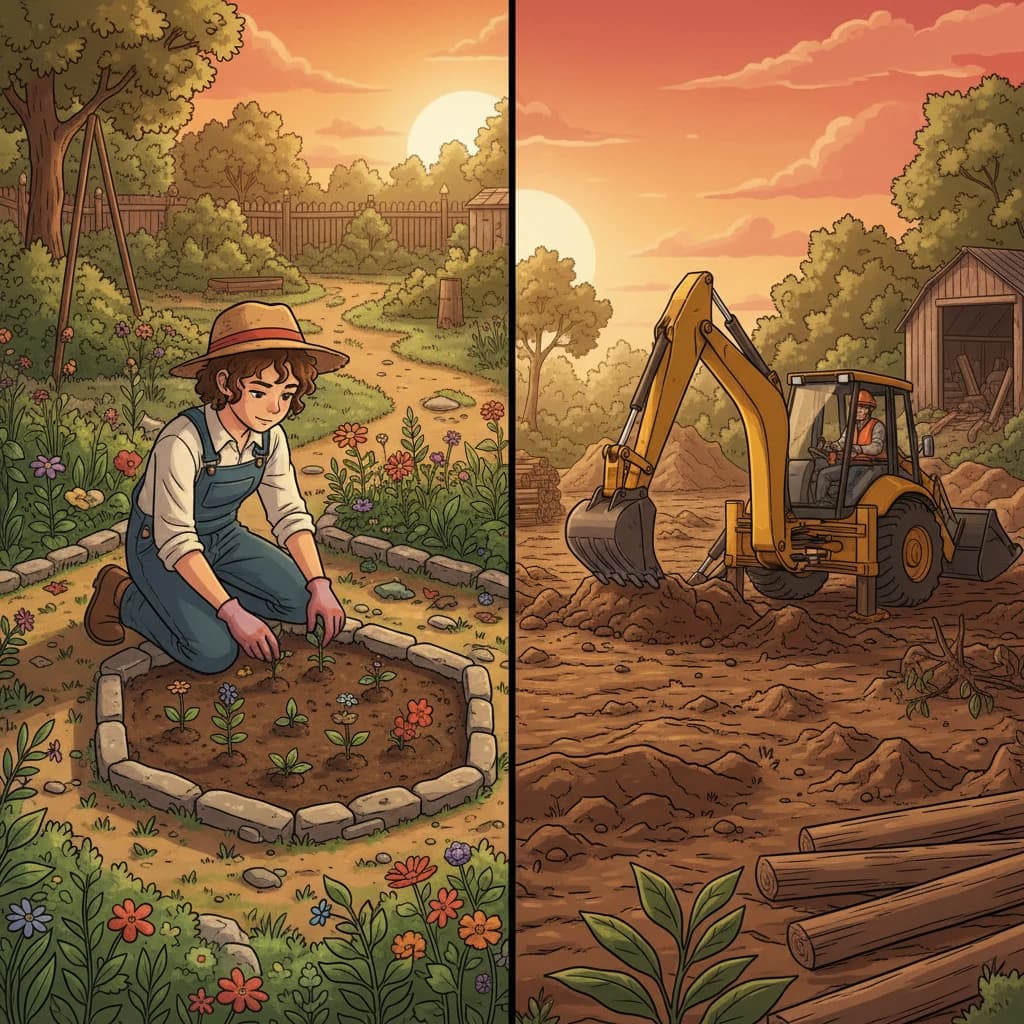
There's a tempting moment in every new permaculturist's life when they want to do everything at once. Bulldoze the lawn. Dig the swales. Plant the food forest. Install the greywater. Rip out the conventional infrastructure. They've read the books, they're excited, and they want results NOW.
This almost always fails.
Mollison's fourth principle: use small and slow solutions. Big projects are expensive. Big mistakes are catastrophic. Small projects let you learn what works on YOUR site before betting big on it. Small systems are cheaper to fix, easier to undo, and more forgiving of beginner errors. The slow path actually arrives faster — because you're not constantly redoing things.
The Compounding Math of Small
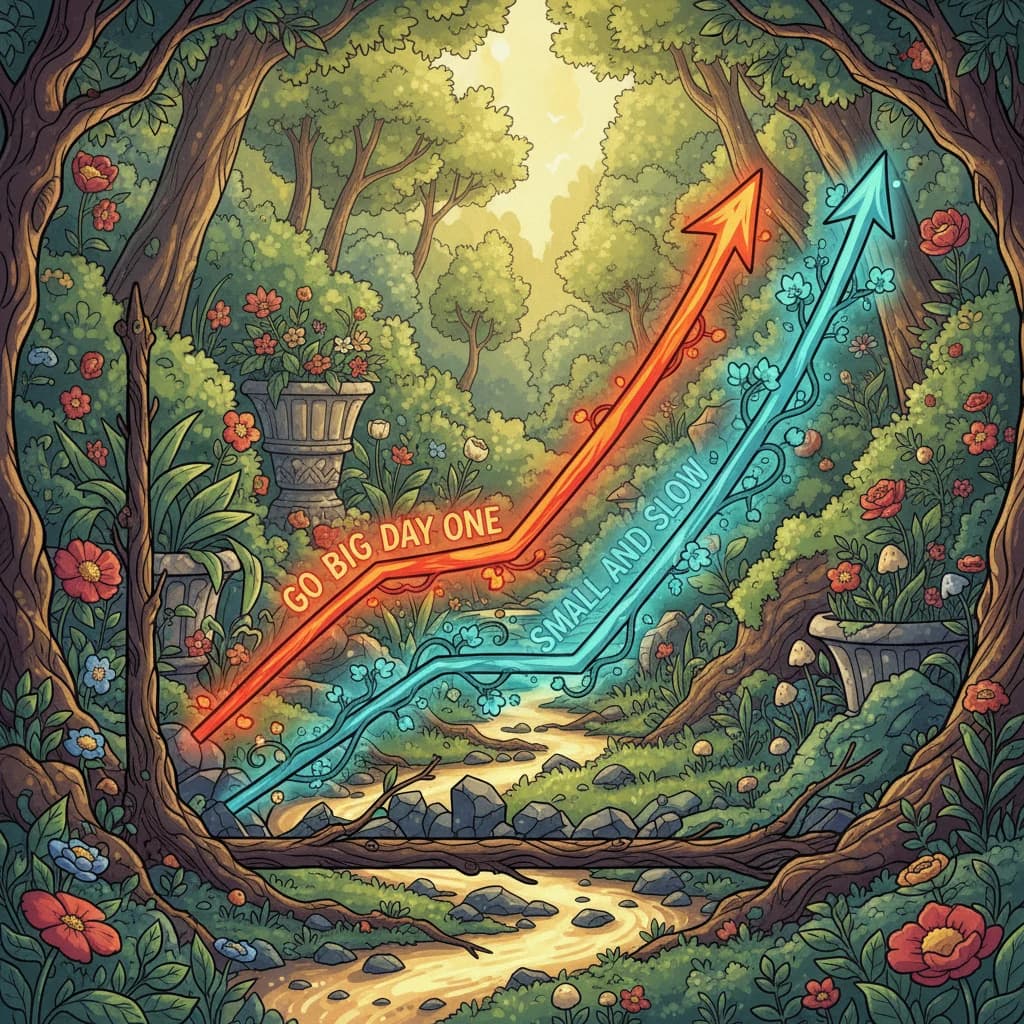
The math of small-and-slow is counterintuitive at first. It feels like you're moving slower. You're not.
- Year 1: small project, 100% success rate. You learn what works.
- Year 2: 2x the project, with adjustments. 90% success rate.
- Year 3: 4x the project. 85% success rate.
- Year 4: 8x. Now you're scaling something that's been refined three times.
Compare to "go big year one" — 1x huge project, 30% success rate, and the failed parts are baked in for a decade. The small-and-slow approach catches up by year 3 and pulls way ahead by year 5.
Why Small Wins
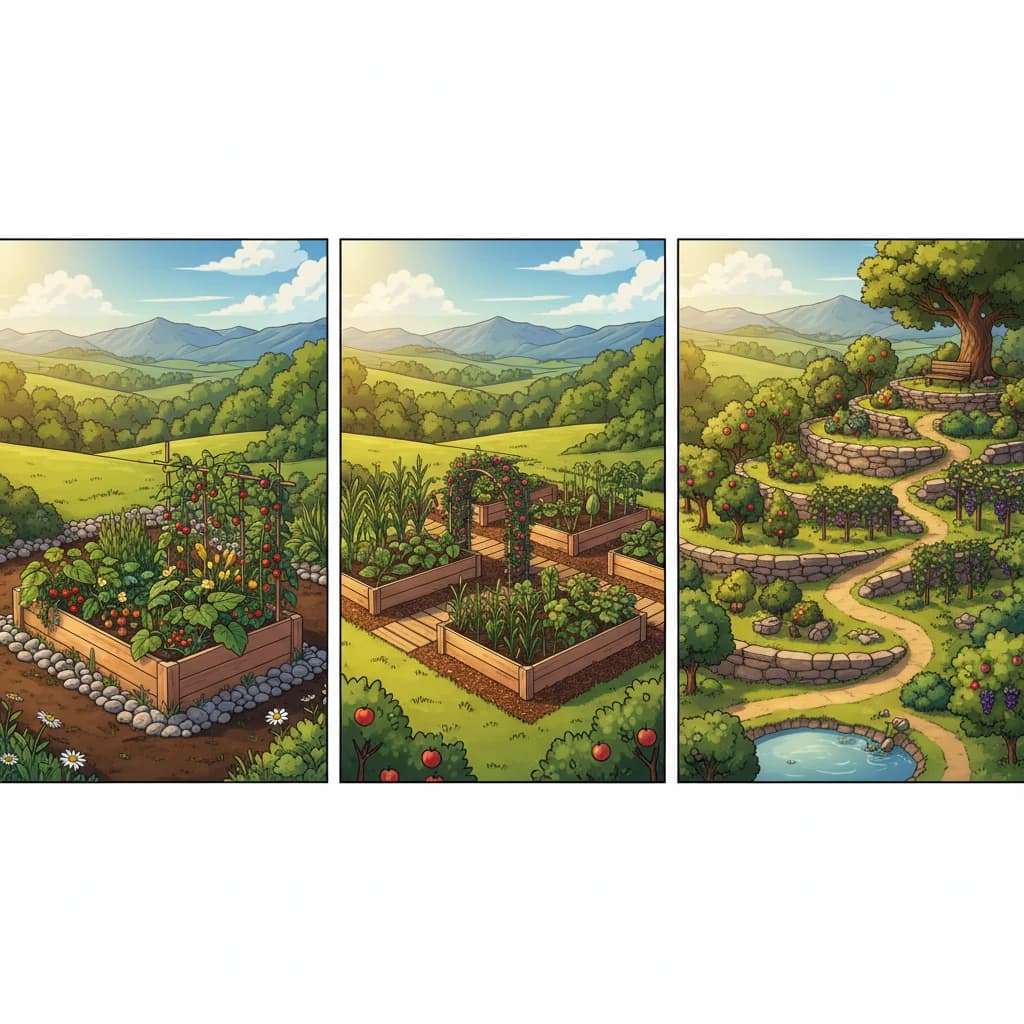
Small systems beat big ones for specific reasons:
- Cheaper to build. A single 4x8 raised bed costs $50. A 30x40 food forest with terraces costs $5,000+. The 4x8 lets you learn raised-bed gardening without the financial risk.
- Faster to complete. A weekend vs a year of weekends. Done quickly means you can iterate.
- Easier to fix. Wrong soil mix? Dump it and refill the small bed. Same mistake at scale = months of remediation.
- Lower stakes for failure. Killing 4 tomato plants in a small bed teaches you the same thing as killing 40 — at 1/10 the loss.
- Smaller footprint of effects. A pest problem in a small system stays small. A pest problem in a monoculture wipes everything out.
The exception: certain things only work at scale (a working pond, a real food forest). Even those are best built incrementally — pond first, then plantings, then animals.
The Phased Approach
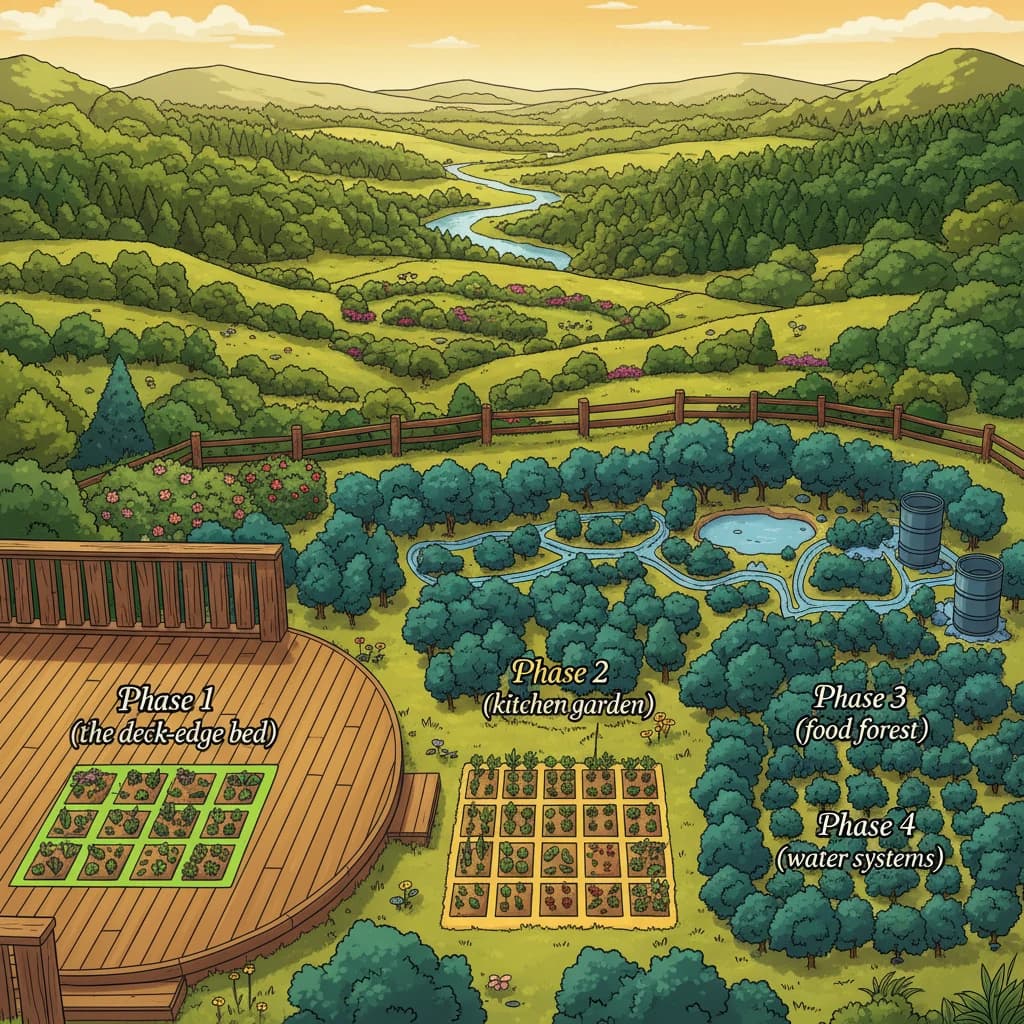
Permaculture designs are typically broken into phases. Year one looks small. Year five looks transformed. Year ten is what people see on Instagram.
A typical phasing for a 1/4-acre suburban property:
- Phase 1 (year 1): One annual vegetable bed near the kitchen. Compost system. Soil-building mulch on weed-prone lawn.
- Phase 2 (year 2-3): Expand the kitchen garden. Plant the first 3-5 fruit trees. Install a rain barrel.
- Phase 3 (year 3-5): Add a small pond or swale. Plant guild plantings around the fruit trees. Add chickens or bees.
- Phase 4 (year 5-10): Mature food forest. Greywater system. Earthworks if needed.
- Phase 5 (year 10+): Ongoing refinement. Sharing yields. Teaching others.
Notice how each phase builds on the previous. The kitchen garden in phase 1 is the laboratory where you learn what grows. The fruit trees in phase 2 use the soil you've been building. The food forest in phase 4 wraps around infrastructure that's already in place.
Did You Know?
Geoff Lawton, one of Mollison's most prominent students, designs sites with a strict "do nothing for the first six months" rule. New owners spend that time observing only. The phased work starts after six months of pure observation. He says it cuts design errors by 80%.
Slow Equals Adaptable

The slow part of "small and slow" matters as much as the small part. A site's personality emerges over years, not months.
- A frost pocket reveals itself only after multiple winters.
- A tree's shadow at 5 years vs 15 years are different shadows.
- A pond settles into its real shape over multiple wet seasons.
- The right plants emerge from years of small experiments.
Building slow means you can adapt as you learn. Building fast locks you in to assumptions made before you knew the site.
When to Move Fast
Small and slow is the default. There are exceptions worth knowing.
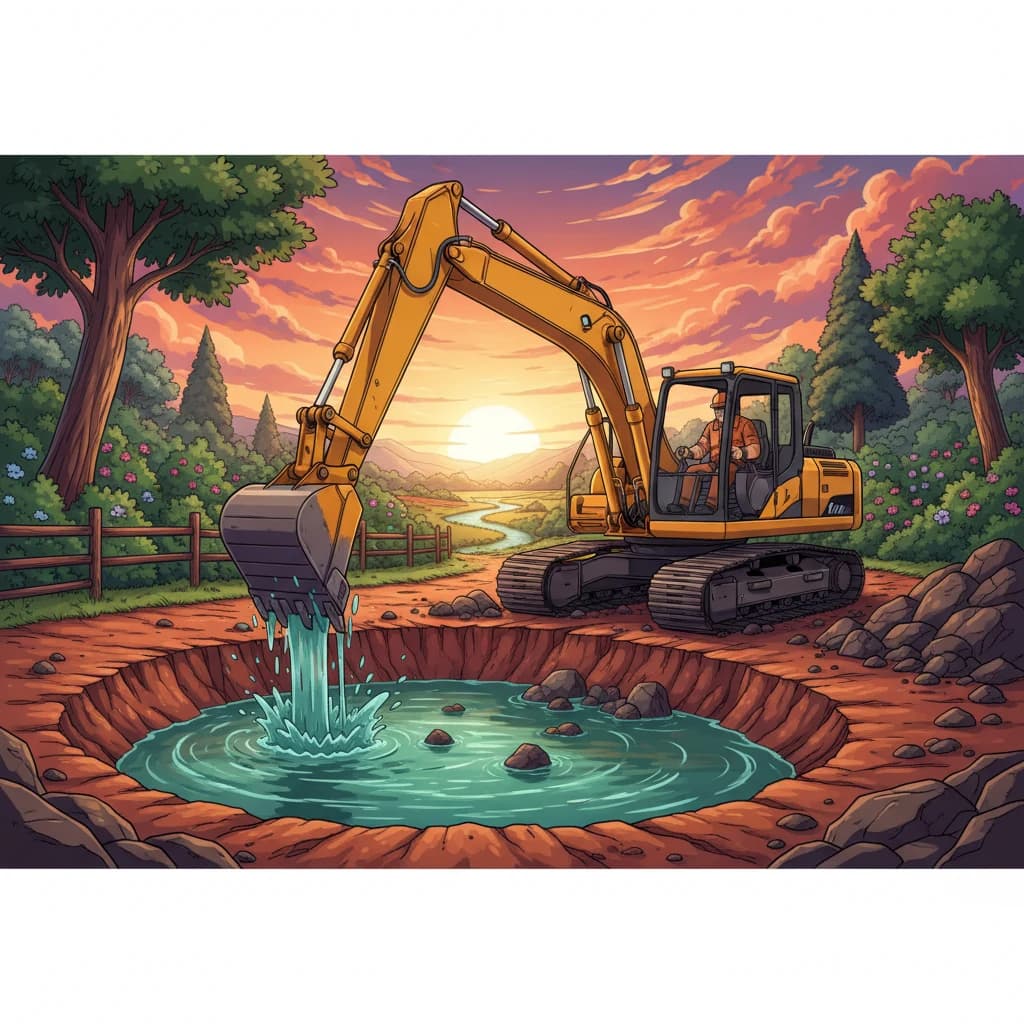
- One-time access. If a contractor with a backhoe is on-site for one day, get the heavy earthworks done while they're there. Coming back next year means a separate mobilization fee.
- Seasonal windows. Planting fruit trees has to happen in spring or fall, not whenever you feel like it.
- Existing damage. If a site has acute problems (active erosion, contamination), addressing them might require a fast intervention, not a phased plan.
- Time-bound funding. A grant, a tax credit, a loan window — sometimes you have to act inside an external timeline.
Even in the exceptions, you should know exactly what you're committing to before you commit. Move fast on the right things; never on the things you can iterate.
Tip
Whenever you're tempted to "just do it all this weekend," ask: what's the smallest version of this I can test first? Most of the time the answer reveals itself.
What This Means For You
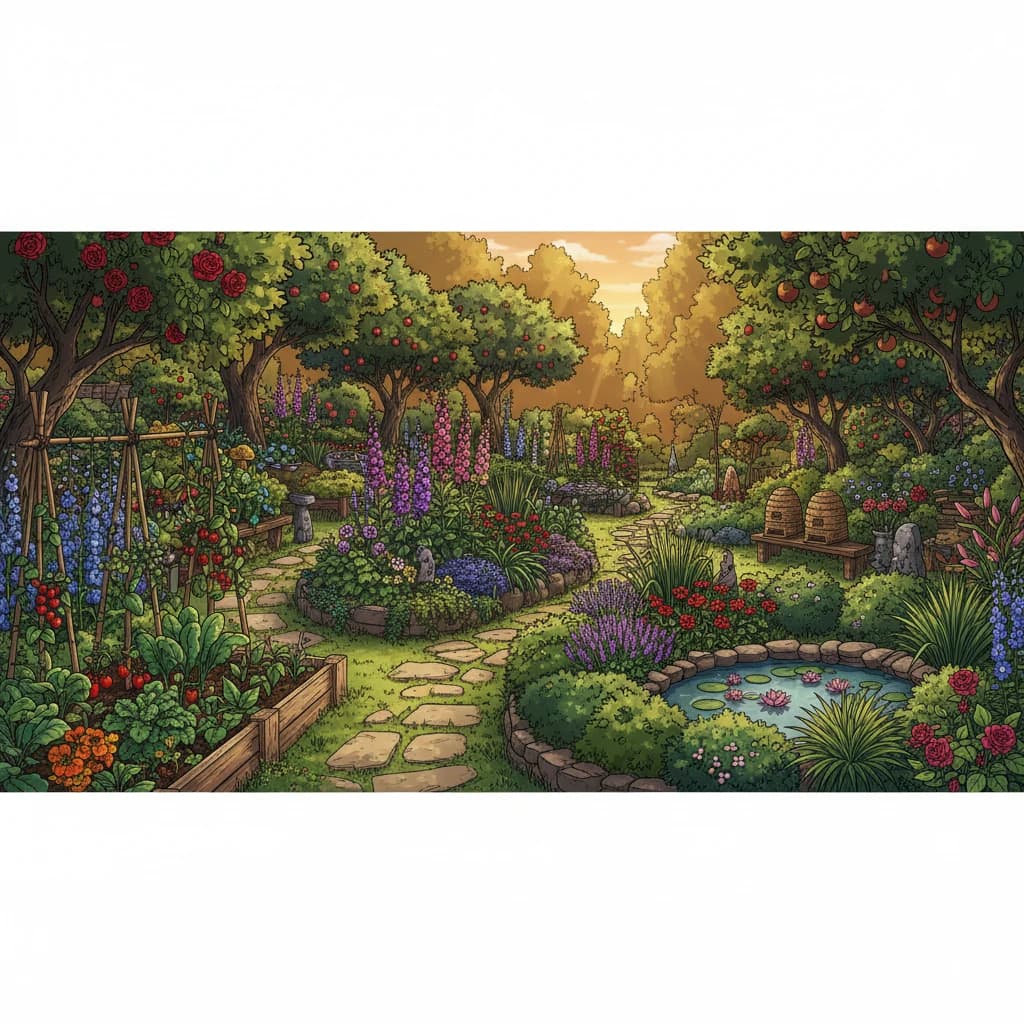
Small and slow is the principle that keeps you in the game long enough for everything else to compound.
What to take away
- Small systems are cheap, fast, fixable. Big systems aren't.
- The math of small wins by year 3-5 — failure rates compound the wrong way at scale.
- Phase your design — Phase 1 is one bed; Phase 5 is a mature system.
- Slow lets you adapt as you learn the site.
- Move fast only on one-time windows — earthworks, planting seasons, external deadlines.
Mistakes to skip
- Don't scale a system that hasn't worked at small size. If your one bed is failing, ten beds will fail bigger.
- Don't take on debt to build a permaculture site fast. It defeats the purpose.
- Don't conflate slow with passive. Slow means deliberate, observant, refining. It's not "do nothing."
Next lesson: Stack Functions and Use Edges — the principles that turn small systems into highly productive ones.
Check Your Understanding
Answer these questions to complete the lesson and see how other learners responded.
Question 1 of 3
Why do permaculture designers prefer small projects over big ones for beginners?
Enjoying the Academy?
Sign up for free to track your progress, earn skills, and get personalized planting dates.
Sign Up for Free