What Is Permaculture?
8 min read
What You'll Learn
Permaculture is a design system for human settlements that mimics how natural ecosystems work. This lesson is the orientation — what permaculture actually is, where it came from, and why it's spreading.
A System That Designs Itself
Most gardens fight nature. You weed because nature wants to fill bare soil. You water because nature would let your plants dry out. You fertilize because monocultures exhaust the ground. The work never ends because you're running upstream of every natural process.
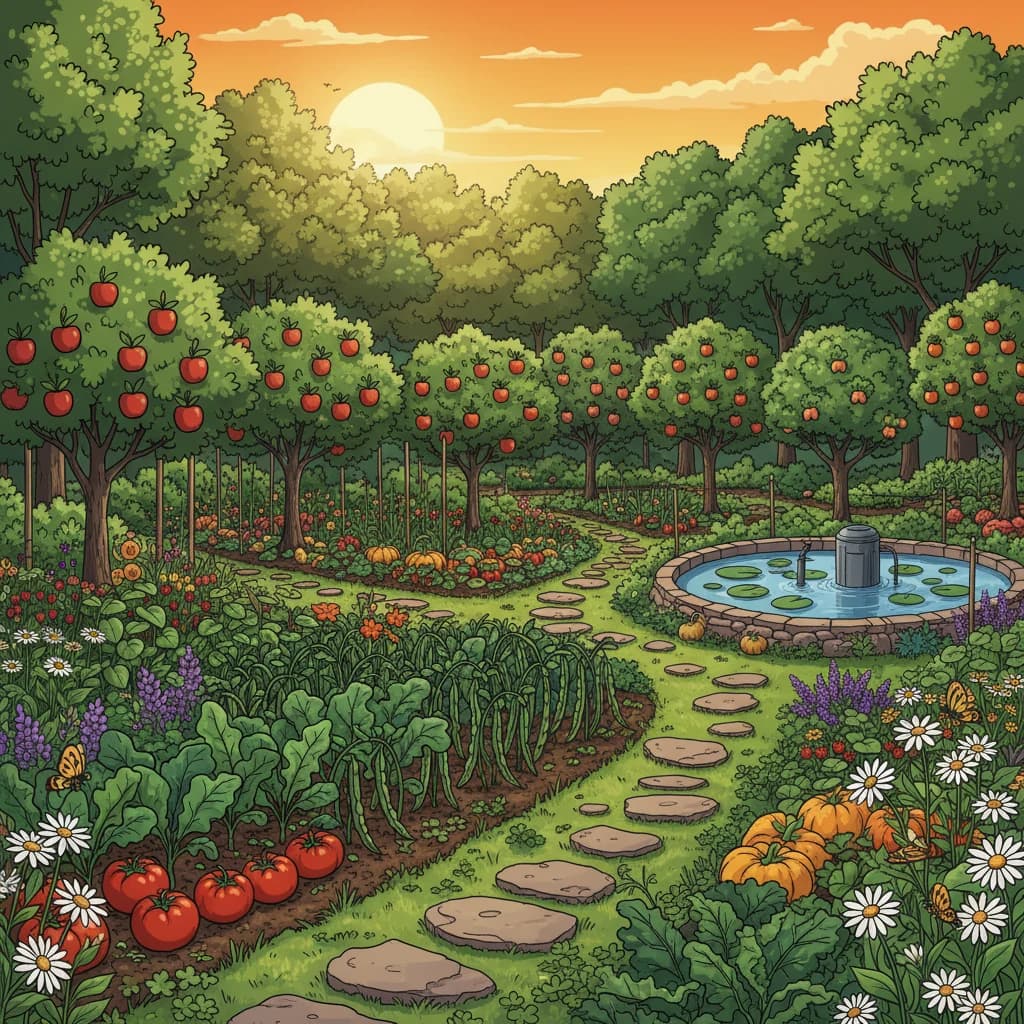
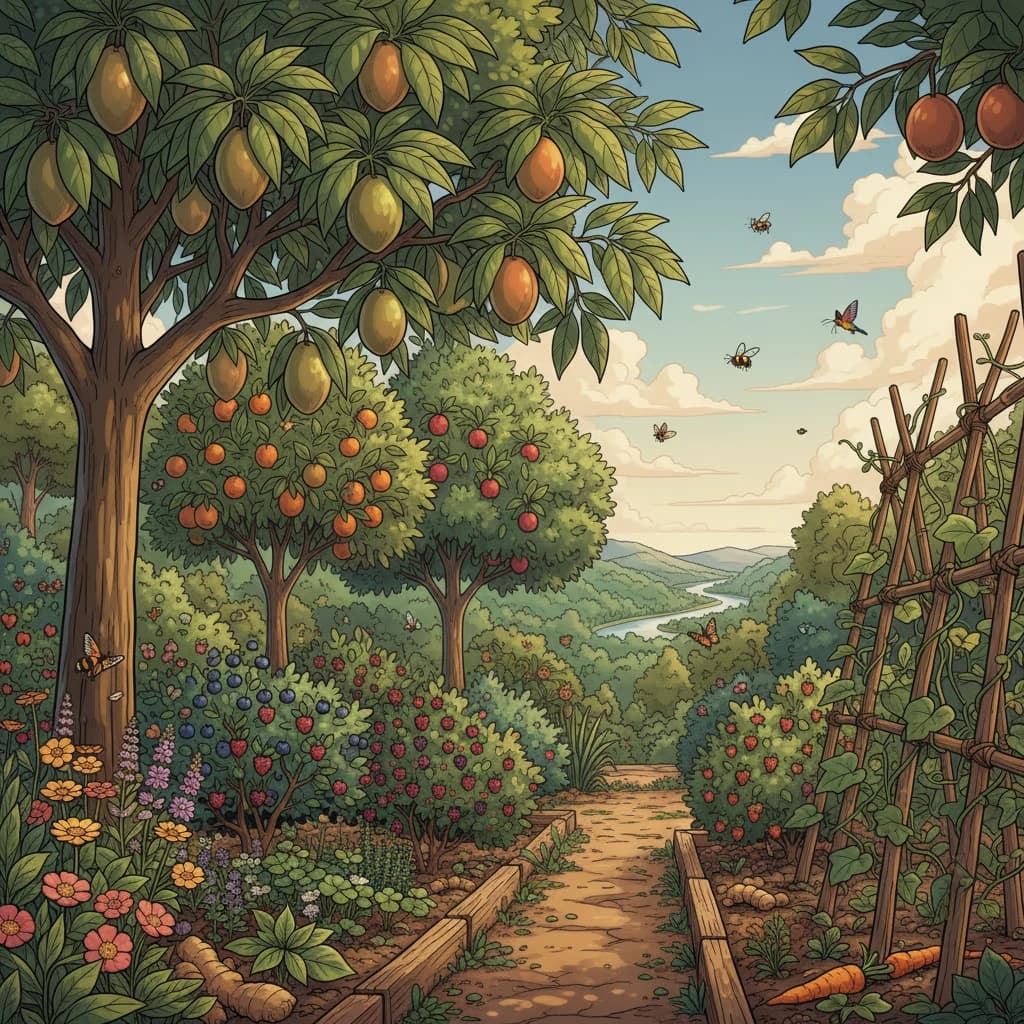
Permaculture flips that. Instead of fighting, you design a system that mimics what nature already does — a forest builds soil, recycles water, fertilizes itself, and produces abundance for centuries without anyone weeding it. If we can copy that pattern, we can grow food the same way.
This Deep Dive is inspired by Bill Mollison's PDC curriculum — the standard 72-hour course taught at accredited institutions worldwide — but designed as a crash course, not a certification path. By the end you'll have a strong working understanding of permaculture, and a clear sense of whether you want to pursue a real PDC for the full credential.
Where the Word Came From
Permaculture was coined in 1978 by Australian researcher and ecologist (1928-2016) who, with his student David Holmgren, developed the permaculture system in the 1970s. He spent the rest of his life teaching it to over 100,000 students worldwide. and his student David Holmgren in Tasmania. The word combines "permanent" and "agriculture" (or "culture") — pointing at sustainable, long-lasting human-supporting systems.
Mollison had spent decades watching ecosystems. He noticed that natural systems are radically more productive than agricultural ones. A rainforest produces tons of biomass per hectare per year with zero human input. A wheat field produces a fraction of that and only with fuel, fertilizer, irrigation, and constant labor.
His question: can humans design food systems that work like rainforests? The answer became permaculture.
Did You Know?
Mollison was once jailed in Australia for "subversive" teaching of permaculture in the 1980s. The government considered the idea of self-sufficient communities a threat to the agricultural-industrial economy.
What Permaculture Is — and Isn't

Permaculture is a design system. That's the most important thing to remember. It's not a list of techniques you check off — it's a way of thinking about a site that uses its own resources, mimics natural patterns, and gets more productive over time instead of less.
What permaculture is:
- A design framework for human-supporting ecosystems.
- A set of ethics (earth care, people care, fair share) and principles (12 of them — covered in lesson 6).
- A method that scales from a balcony to a farm to a region.
- A discipline with formal education (the PDC) and global community.
What permaculture isn't:
- A specific gardening technique.
- Organic farming with a different name (it overlaps but is broader).
- A religion or political movement (though some practitioners treat it that way).
- Something that requires you to live off-grid in the woods.
You can practice permaculture in a 200-square-foot apartment, a suburban yard, or a 100-acre farm. The principles scale up and down — only the implementation changes.
Why It Matters Now
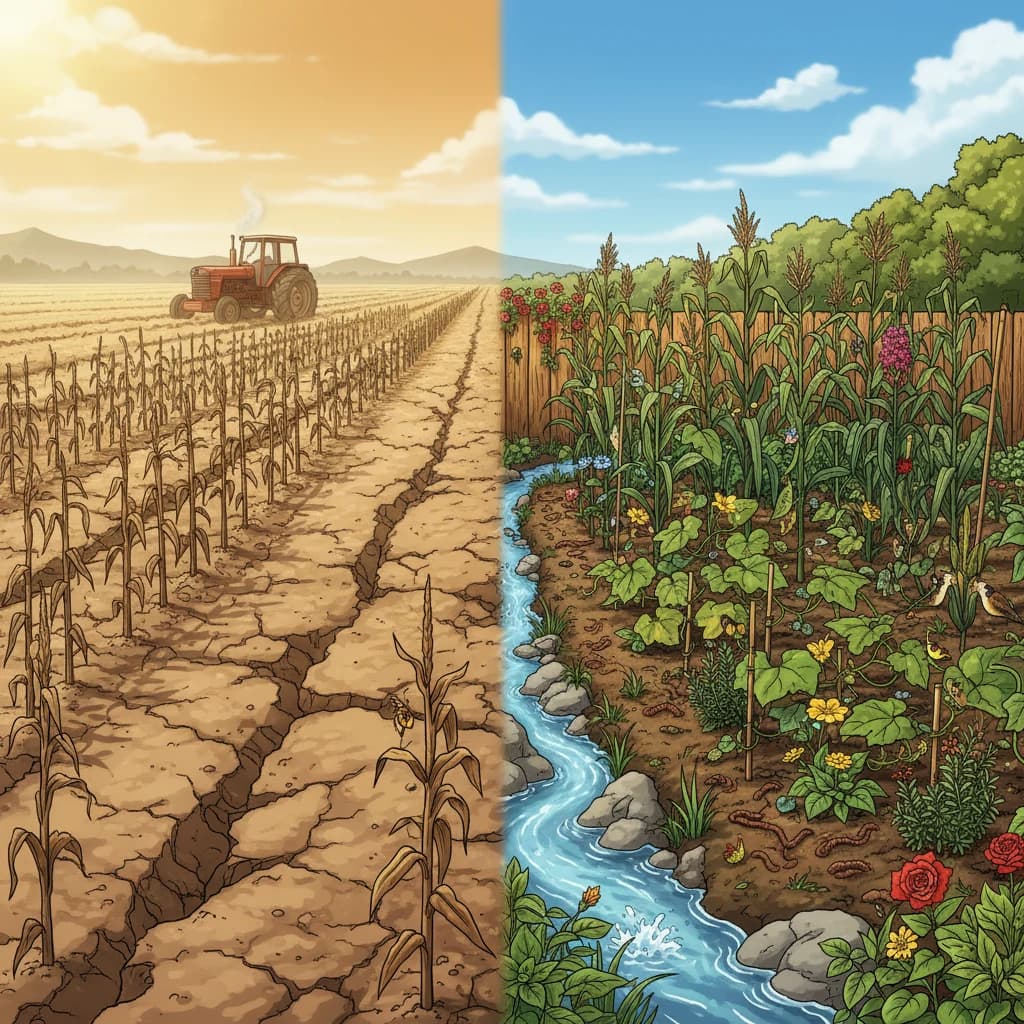
Conventional agriculture has a math problem. Industrial farming uses around 10 calories of fossil fuel energy to produce 1 calorie of food. Soil is depleting faster than it can regenerate — the world has lost about a third of its arable topsoil in the last 40 years. Water tables are dropping. Pollinator populations are crashing.
Permaculture's answer is to grow food the way ecosystems do: more diverse, more layered, more interconnected, and far less dependent on outside inputs. A well-designed permaculture system builds soil, holds water, attracts pollinators, and produces food at the same time. The system gets richer every year instead of poorer.
You don't need to believe the world is ending to find this useful. The principles work just as well for someone who wants a beautiful, productive backyard with less work as they do for someone preparing for collapse.
Tip
Don't evangelize. The fastest way to turn neighbors off permaculture is to lecture them about industrial agriculture. Show them your garden instead. People copy what works.
How This Course Works
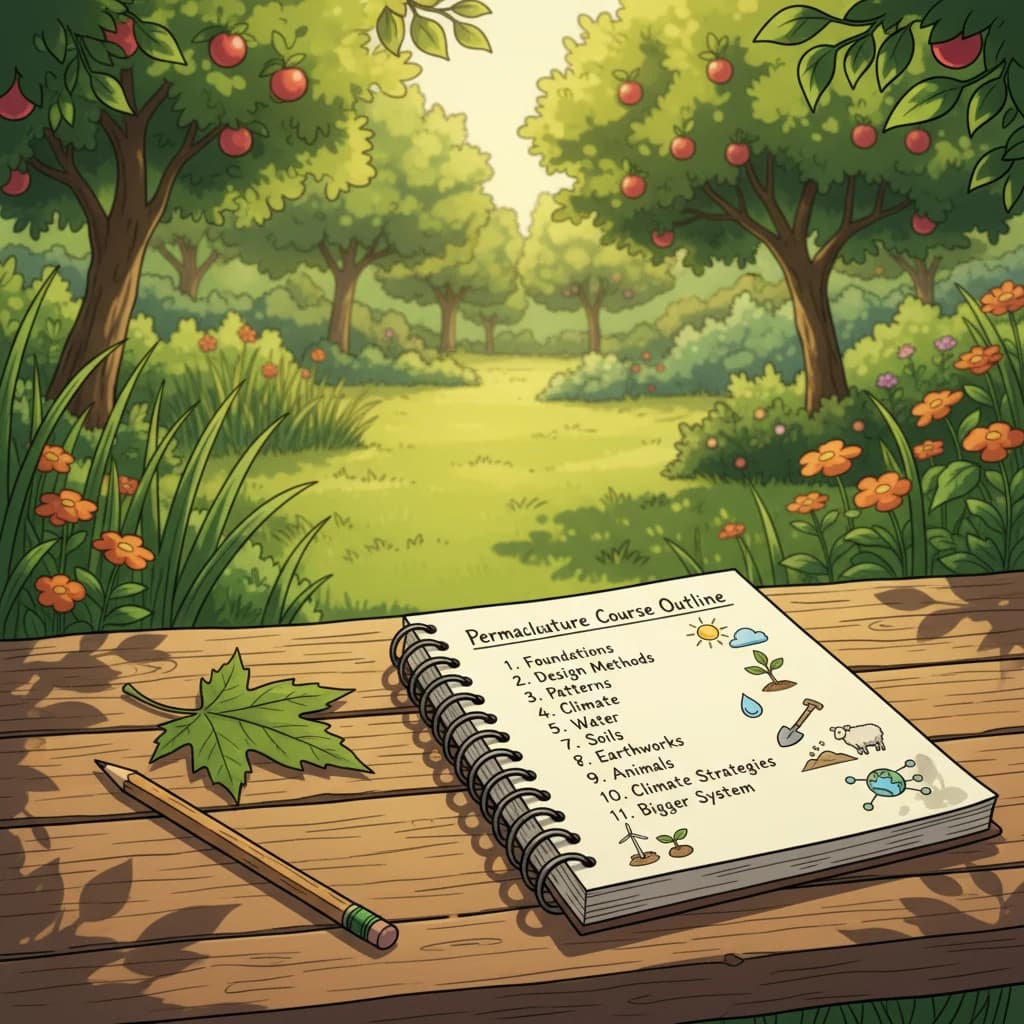
The full PDC is traditionally taught as a 72-hour intensive — 14 days of lectures and field work. We've broken that into 11 levels, each containing 7 lessons:
- 1Foundations (you're here)
- 2Design Methods — how to plan a site
- 3Pattern Understanding — natural patterns in design
- 4Climate — working with conditions
- 5Trees — the keystone of permaculture
- 6Water — catching and storing
- 7Soils — building living systems
- 8Earthworks — reshaping the land
- 9Animals in the System — integration
- 10Climate Strategies — different playbooks
- 11The Bigger System — community and global
Each lesson is structured the same way as the free Course: 7 sections, tips, did-you-knows, a quiz at the end. You can read straight through or jump around.
The Inspiration Path
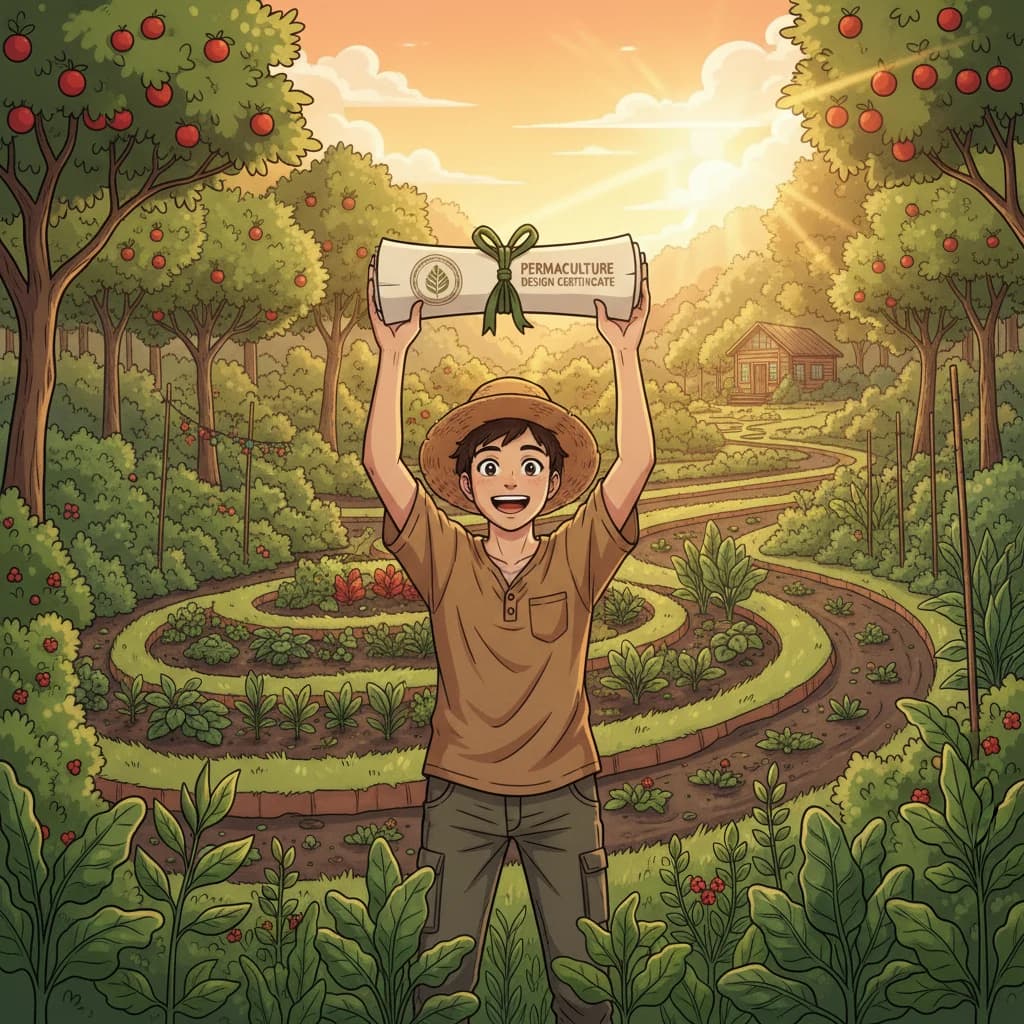
This Deep Dive is comprehensive, but it's not certification. The internationally recognized PDC is a 72-hour course delivered at an accredited institution by a qualified teacher, ending with a real-world site design as your final project. After completion you can call yourself a Permaculture Designer.
If anything in this course resonates, we strongly encourage going pro:
- The Permaculture Research Institute lists accredited PDCs worldwide.
- Geoff Lawton and others teach online PDCs that fit working schedules.
- Local permaculture institutes offer in-person courses on real designed sites — the field work is irreplaceable.
A PDC costs $1,000-$2,500 and changes how you see the world. We built this Deep Dive to inspire you to take the leap.
Did You Know?
Over 100,000 people have completed accredited PDCs since 1981. The graduates have designed properties on every continent except Antarctica, and the curriculum is one of the most successful environmental education programs ever created.
What This Means For You
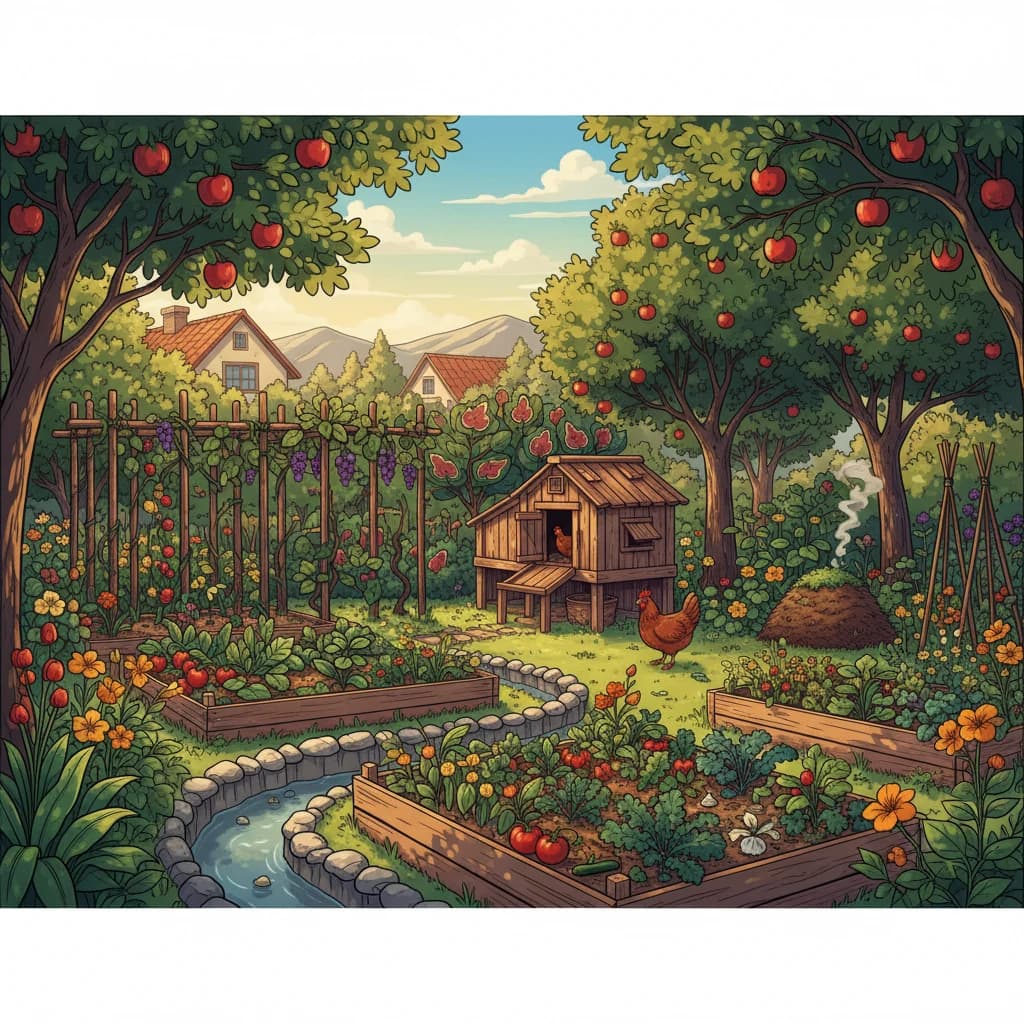
Permaculture is a way to grow food (and a way to live) that gets better the longer you do it.
What to take away
- Permaculture is a design system, not a single technique.
- It mimics nature — diverse, layered, self-fertilizing, self-watering as much as possible.
- It scales from balcony to farm to region. The principles don't change.
- It has formal education through the PDC at accredited institutions worldwide.
- It works — over four decades and 100,000+ practitioners say so.
Mistakes to skip
- Don't expect permaculture to be a quick fix. A mature system takes 5-10 years. The tradeoff is decades of low-effort productivity after that.
- Don't try to do everything from this course at once. Start with one principle. Apply it. Then add the next.
- Don't skip the PDC if you fall in love. Reading about permaculture and doing one are different things. The course is where it clicks.
The next lesson covers the three ethics that everything else flows from. Take it slow — these foundations matter.
Check Your Understanding
Answer these questions to complete the lesson and see how other learners responded.
Question 1 of 3
According to this lesson, what makes permaculture different from regular gardening?
Enjoying the Academy?
Sign up for free to track your progress, earn skills, and get personalized planting dates.
Sign Up for Free