
How often should you water seedlings?
7 min read
What You'll Learn
New growers almost always get seedling watering wrong. Learn the simple finger-test routine, what healthy soil moisture feels like, and the signs to watch for.
The most common mistake new growers make
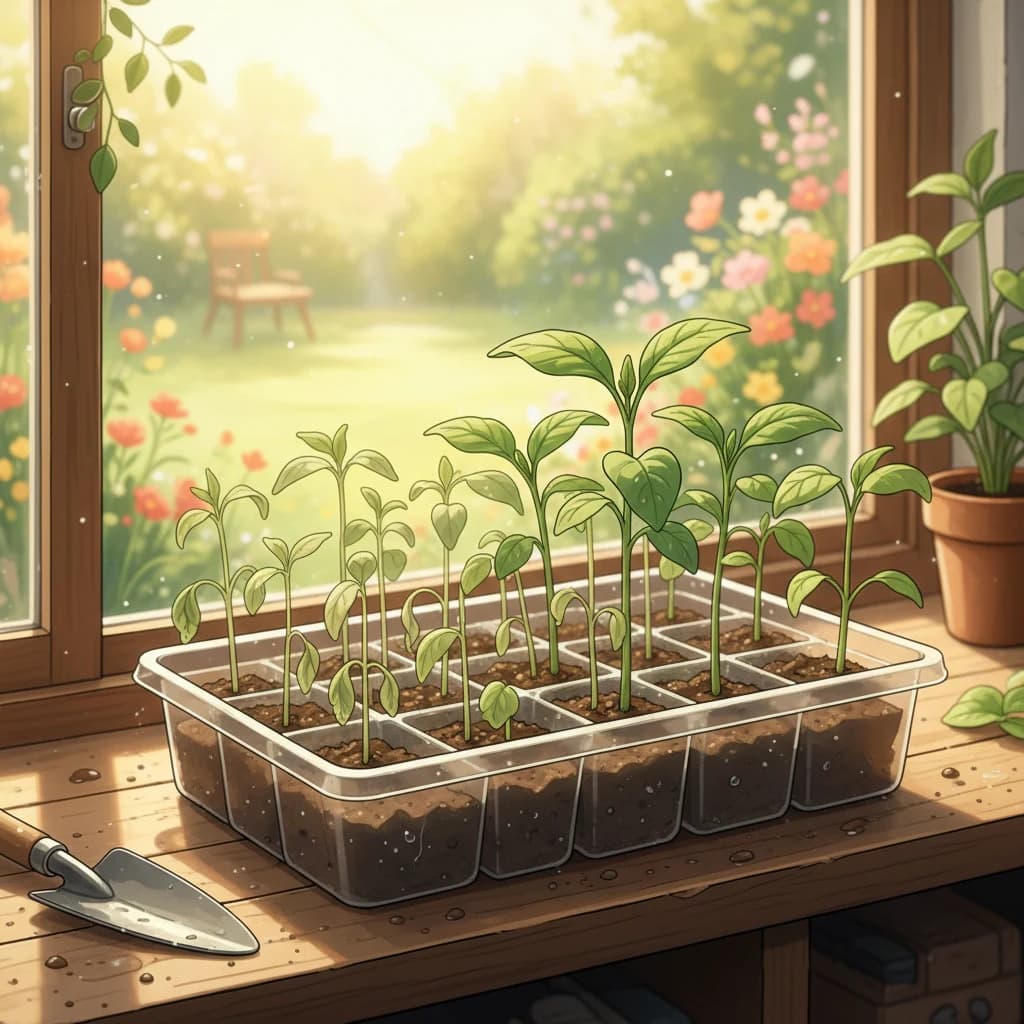
Watering seedlings feels straightforward: plants need water, so you give them water. But more seedlings die from overwatering than from any other single cause, and underwatering is a close second. The tricky part is that both problems can look almost identical at first glance: drooping leaves, pale color, stunted growth. New growers see a drooping seedling, add more water, and accidentally make the real problem worse.
Understanding why seedlings are so sensitive changes everything. A seedling is not just a small version of a mature plant. Its root system is tiny, fragile, and still learning to move water up into the stem. Soak that small root zone and the roots suffocate. They need oxygen in the soil just as much as they need moisture. Let it dry out completely and the fine root hairs that do most of the water-absorbing work die within hours. The window of "just right" is narrower than it is for established plants, but once you know what to feel and look for, hitting that window becomes second nature.
What healthy soil moisture actually feels like
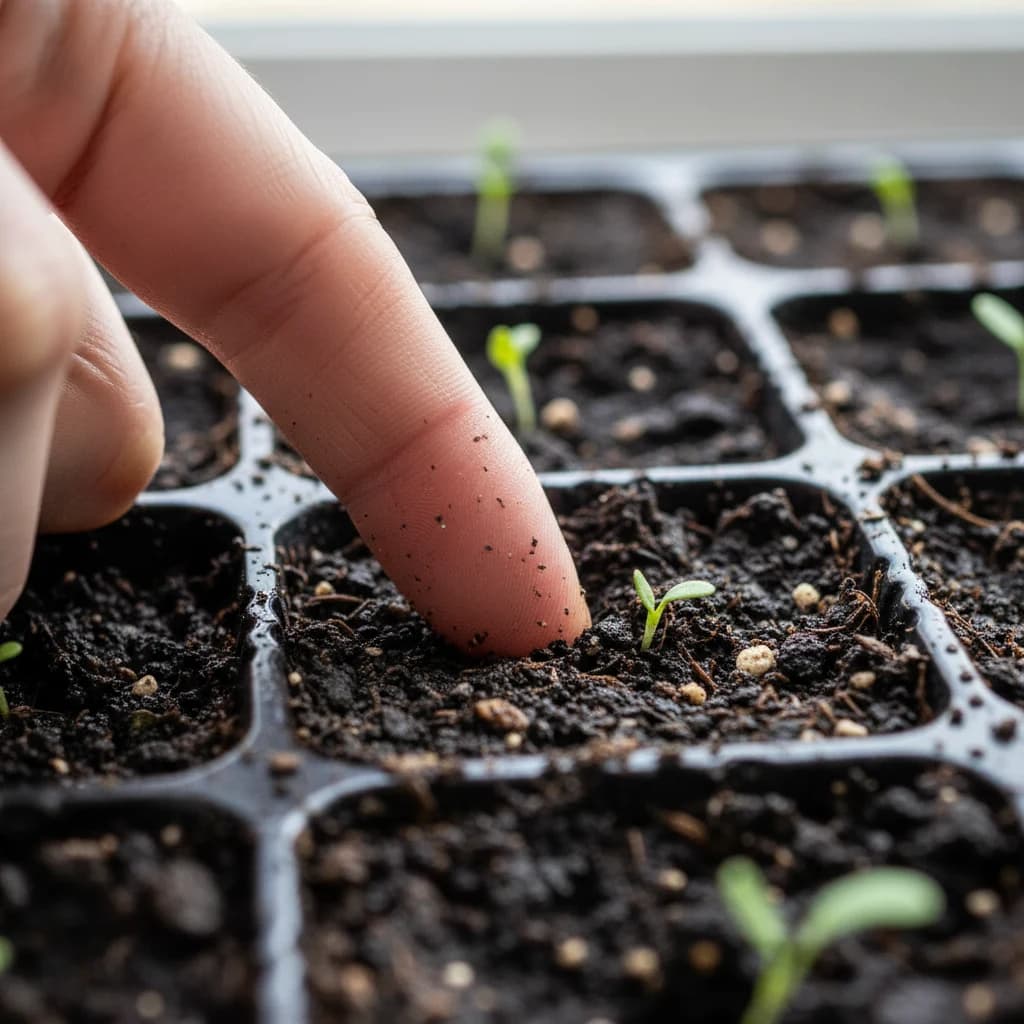
The best tool for checking seedling moisture is already attached to your hand. Push your index finger about one centimeter, roughly the depth of your first knuckle, into the soil right next to the seedling stem. What you feel tells you everything.
- Wet and cool, sticks to finger heavily: Too much moisture is present. Hold off on watering entirely and improve airflow around the tray.
- Moist and cool, a little clings to finger. This is the sweet spot. The soil has enough water for roots to drink freely without drowning them.
- Barely cool, almost nothing clings: Getting dry. Water soon, ideally within a few hours.
- Room temperature, dusty or crumbly: Dangerously dry. Water gently right now.
You can also lift the container. A pot full of moist soil is noticeably heavier than one that has dried out. After a few sessions you will memorize the weight difference and barely need to use the finger test at all.
Did You Know?
Seedling roots actively grow toward moisture rather than straight down. If one side of a cell tray dries out faster than the other, roots will cluster toward the wetter side and develop unevenly: which is one reason uniform watering matters more for seedlings than for bigger plants.
Building a simple finger-test routine
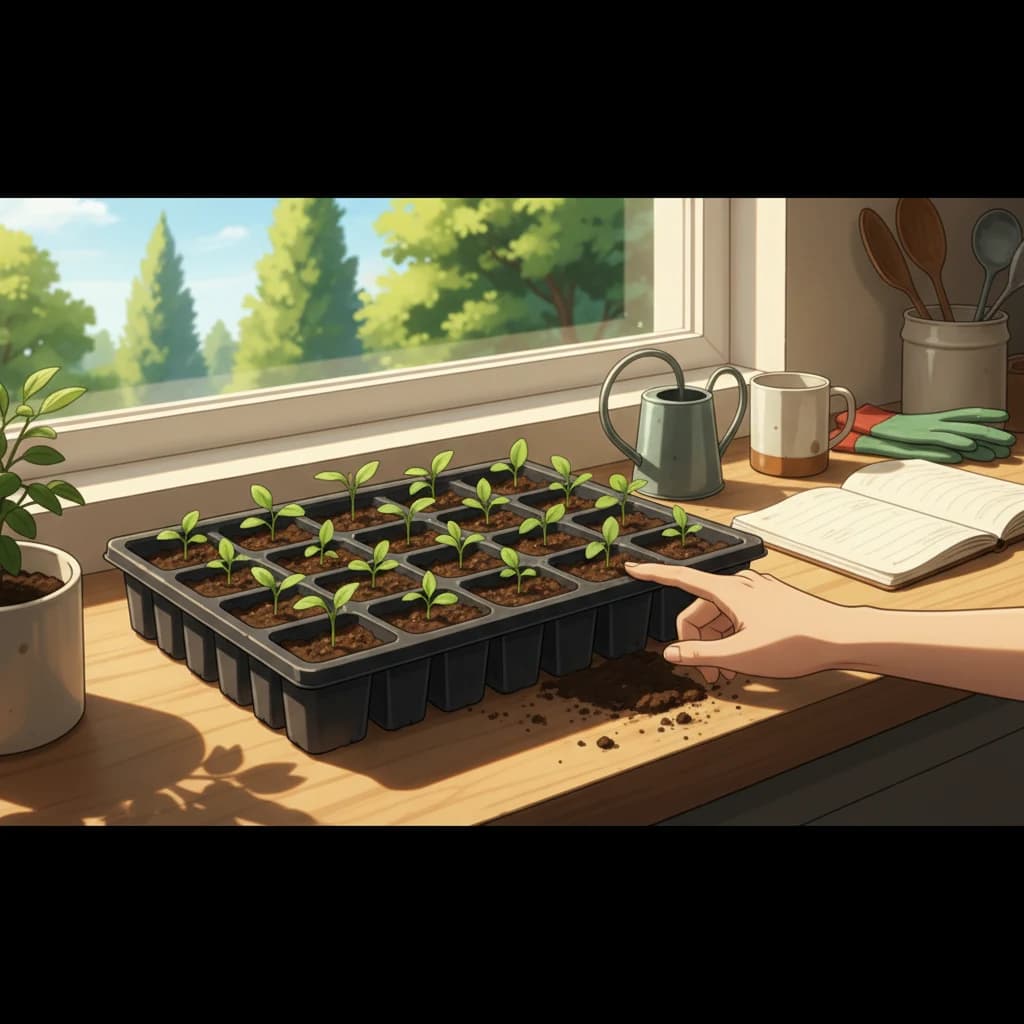
Routine beats guesswork every time. Instead of watering on a fixed schedule (say, every Tuesday and Friday) check your seedlings on a fixed schedule and let the soil tell you whether water is needed.
Here is a routine that works for almost every indoor seedling setup:
- 1Morning check (every day): Do the finger test on each tray or pot. Note which ones feel dry at the first-knuckle depth.
- 2Water only what needs it. Skip containers that still feel moist. Watering everything at once regardless of actual moisture level is the habit that causes the most damage.
- 3Evening glance. Look at the leaves, not the soil. Are they upright and slightly turgid, or do any look wilted? Wilting in the evening, after a warm day, can be normal. Wilting first thing in the morning is a genuine warning sign.
- 4Weekly lift test. Pick up each tray bare-handed and compare the weight to how it felt after you last watered. This trains your muscle memory quickly.
Tip
Keep a small sticky note or a simple note on your phone recording when you last watered each tray and what the soil felt like. After two weeks you will see a clear pattern for how fast that specific soil, in that specific spot, dries out, and your routine will become almost automatic.
How often is "often enough"?

There is no universal answer to how many days between waterings because the correct interval depends on at least four variables that change from setup to setup.
- Container size: A 50-cell seedling tray holds far less soil than a 4-inch pot. Smaller volume dries out faster, sometimes within 24 hours under grow lights.
- Growing medium: Seed-starting mixes are designed to drain quickly and hold less water than standard potting soil. That is a feature, not a flaw, it protects roots from rot, but it means you check more frequently.
- Temperature and airflow: A tray sitting under a heat mat in a warm room can dry out twice as fast as the same tray in a cool basement. Fans and ventilation accelerate drying too.
- Seedling stage: A newly germinated sprout with a thread-thin stem needs far less water volume than a seedling that has pushed out its first true leaves and developed a visible root ball.
As a rough starting point, most indoor seedling trays under grow lights need watering every one to two days in warm conditions, and every two to three days in cooler or less well-lit spots. Use those numbers as a reason to check, not as a schedule to follow blindly.
How to water without harming tender stems
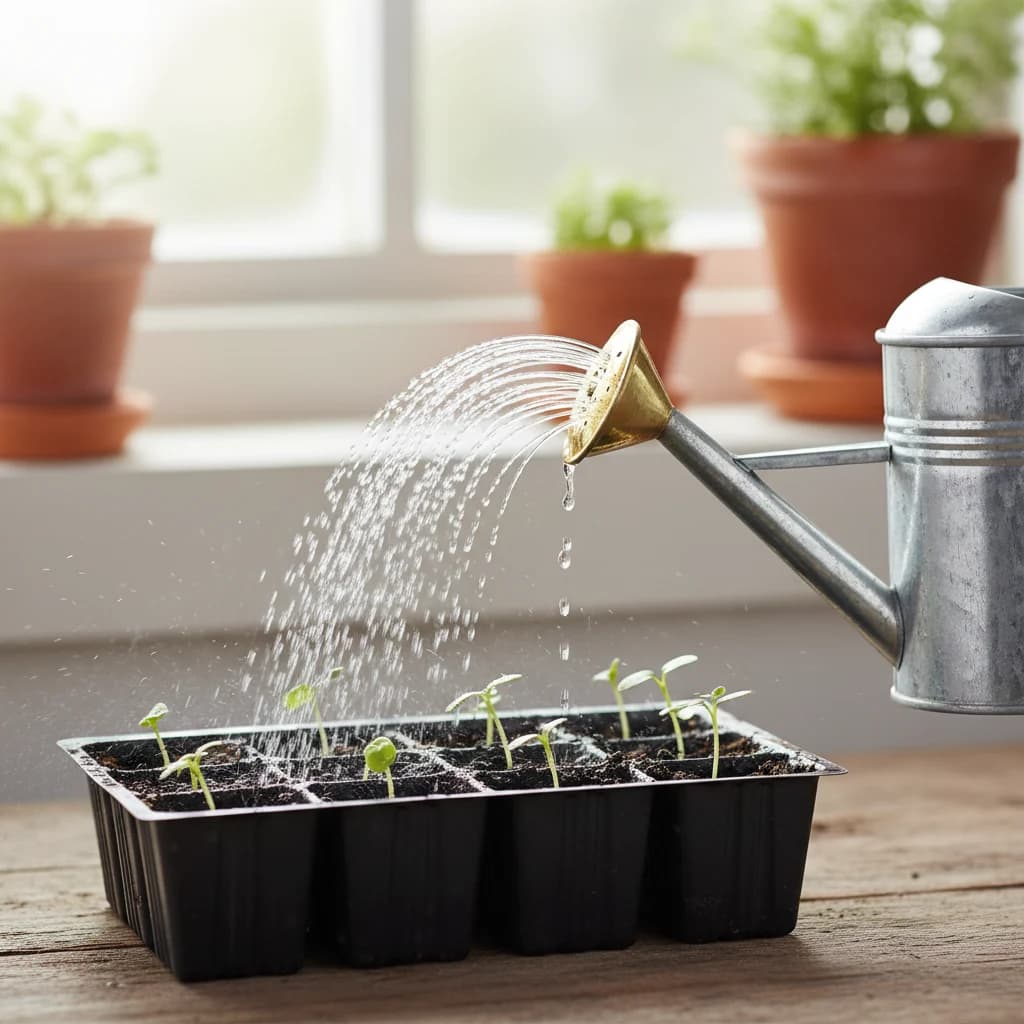
How you deliver the water matters as much as how much you give. A heavy stream from a regular watering can nozzle can knock a seedling flat, wash away the thin soil layer covering roots, and compact the surface so water runs off the sides instead of soaking in.
For very young seedlings, from germination through the first true leaf stage, bottom watering is often the gentlest approach. Set the tray inside a larger tray or container with about one centimeter of water in the bottom. The soil wicks moisture upward from below over about 20 to 30 minutes. Once the surface of the soil feels moist to the touch, lift the tray out and let it drain. This method also encourages roots to grow downward toward the moisture rather than staying near the surface.
For slightly older seedlings, a watering can fitted with a fine-hole rose head works well. Water around the base of the stems rather than directly onto the leaves. Wet foliage sitting in cool, still air is an open invitation to damping off, a fungal condition that can wipe out an entire tray overnight.
Tip
After bottom watering, always let trays drain fully before returning them to their growing spot. Sitting in standing water for more than 30 to 40 minutes starts to push oxygen out of the root zone.
Reading the warning signs early
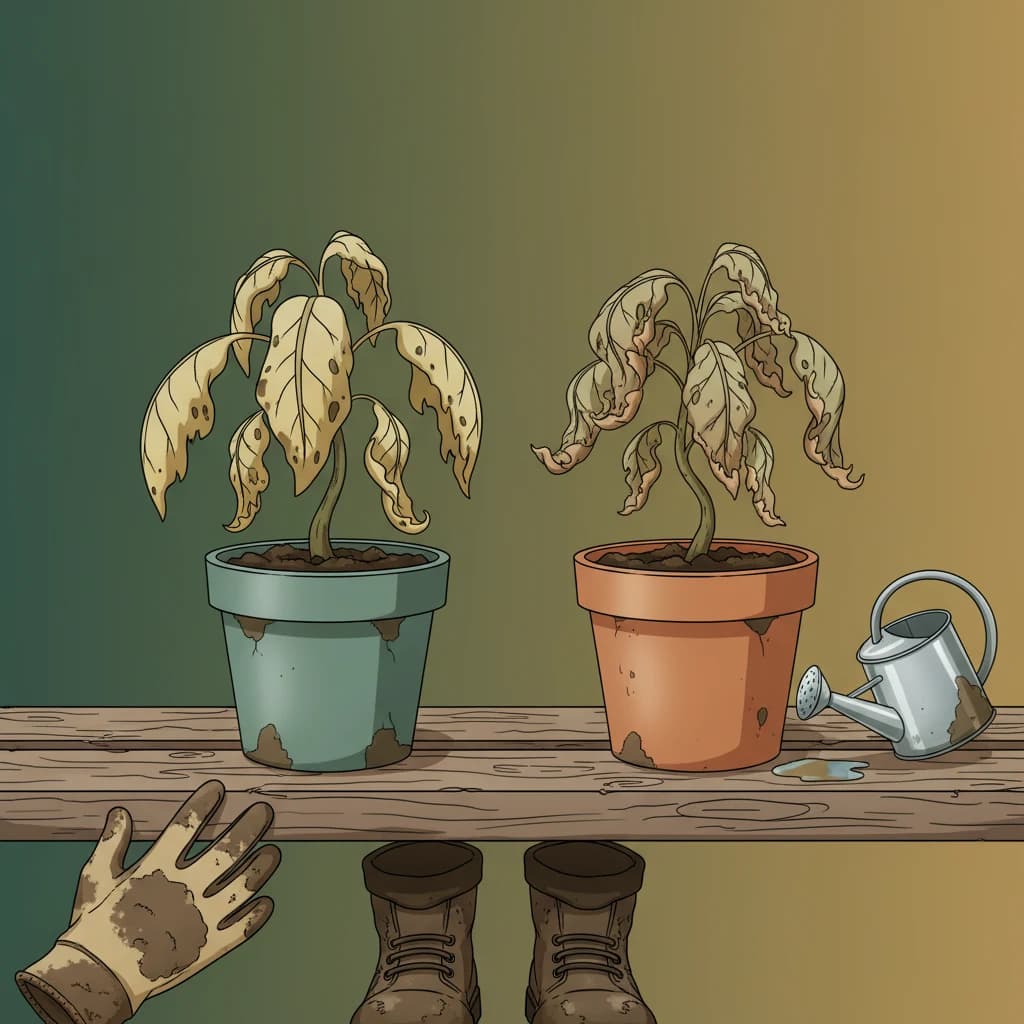
Even with a solid routine, seedlings will occasionally signal that something is off. Catching those signals early keeps a small problem from becoming a lost tray.
Signs of overwatering:
- Leaves are yellow or pale green, especially lower leaves.
- Stem near the soil line looks pinched, dark, or mushy. This is damping off starting.
- Soil surface stays dark and wet for more than two days after watering.
- A sour or musty smell rises from the tray.
Signs of underwatering:
- Leaves curl inward along the edges or feel papery.
- The seedling droops in the morning before the day heats up.
- Soil has pulled away from the edges of the container, leaving a visible gap.
- Watering causes water to run straight out the bottom without being absorbed: very dry soil becomes hydrophobic and needs slow, repeated applications to re-wet.
If you suspect overwatering, skip watering entirely, move the tray somewhere with better airflow, and let the soil recover. If you suspect underwatering, water slowly and in small amounts repeated over an hour rather than flooding the tray all at once.
What This Means For You
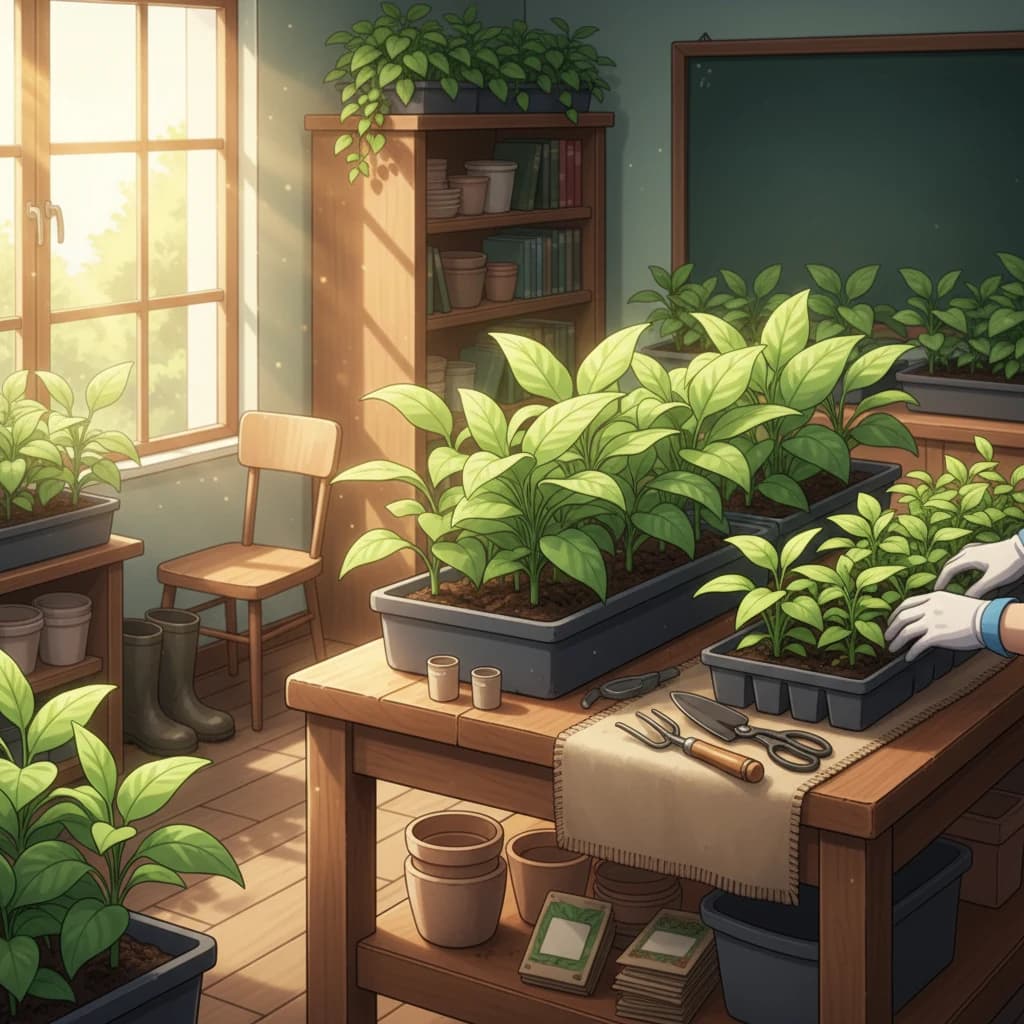
Getting seedling watering right comes down to checking more and assuming less. The finger test takes about five seconds per tray and gives you better information than any app or schedule.
What to take away
Mistakes to skip
Once you build the habit of checking before watering, you will find your seedlings grow faster, stand stronger, and make it to transplant day in far better shape.
Check Your Understanding
Answer these questions to complete the article and see how other readers responded.
Question 1 of 3
When you do the finger test on a seedling tray, which result means the soil is at the ideal moisture level?
Want more like this?
New articles as we write them, plus planting dates for where you grow.
More to read

Why Did Your Seedlings Sprout, Flop Over, and Die?
They came up perfect, then folded at the soil line like something bit them. What actually attacks baby seedlings, why too much care invites it, and the two easy habits that stop it for good.

Why Do Some Seeds Sprout in Days and Others Take Three Weeks?
Radishes explode overnight while carrots sulk for weeks, and it isn't your fault. Seed coats, built-in timers, and the overnight soak that talks a slow seed into hurrying up.

How Does a Seed Know It's Safe to Sprout?
Seeds are always checking three things before they commit. What water, warmth and depth each tell the seed, why nothing sprouts in a cold room, and how to give the all-clear signal on purpose.