Orchid Growing Guide
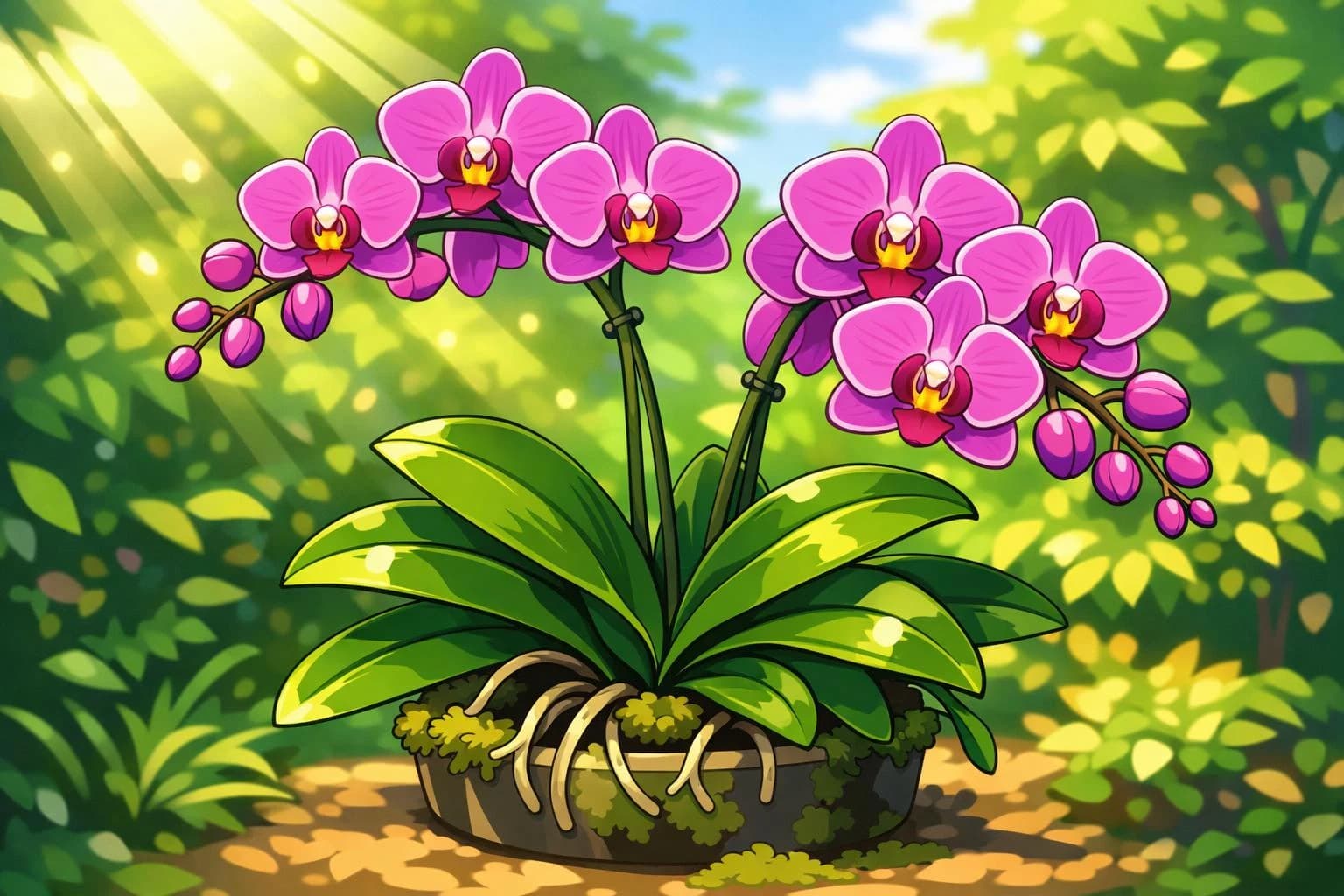
Orchid At a Glance
Difficulty
Moderate
Category
Houseplant
Sun Exposure
Partial Shade
Frost Tolerance
Frost Tender
Cold Hardiness
Survives to 15°C
Plant Family
Orchidaceae
Growing Season
Year Round
Plant Lifecycle
Perennial
How to Start It
★ Recommended for beginners
If a baby plantlet forms on an old flower stem, wait until it has a few roots, then detach and pot it in bark: an exact copy of the parent.
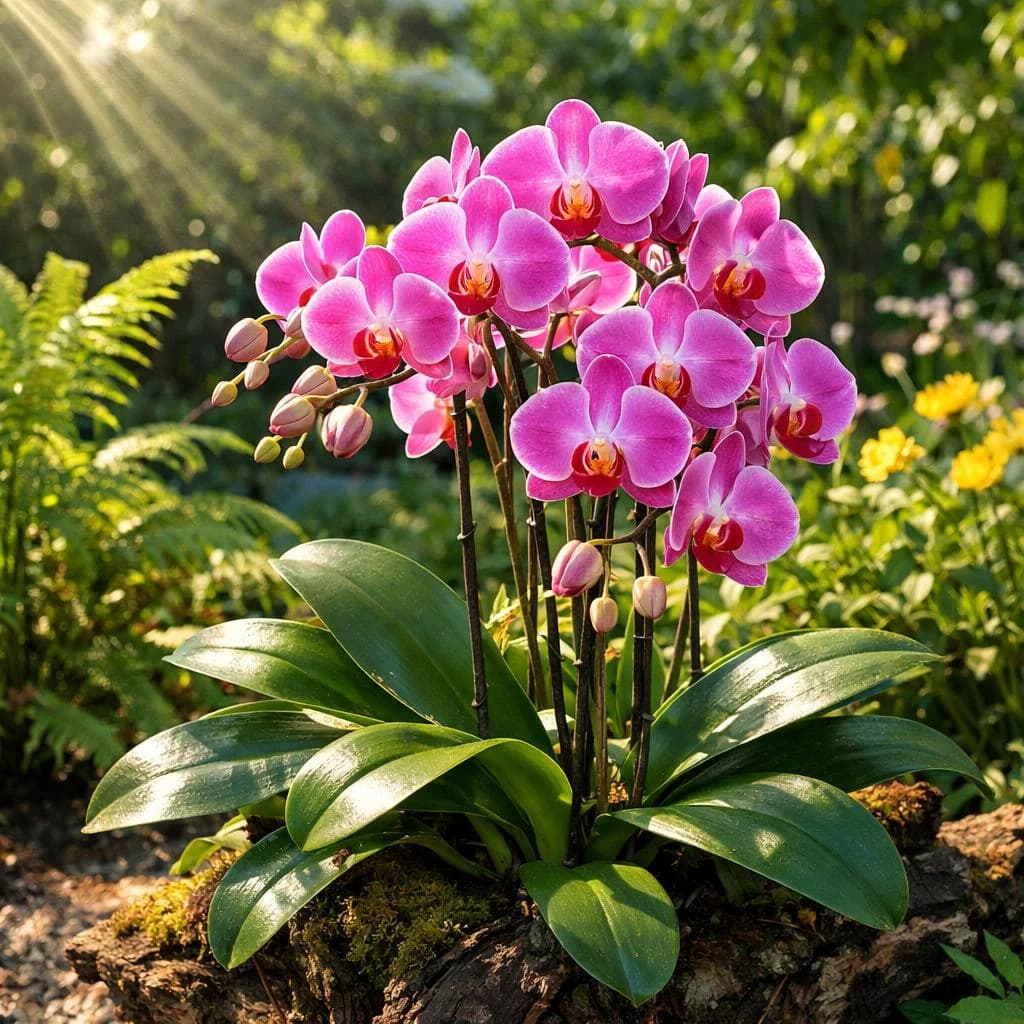
The common moth orchid (Phalaenopsis) is far easier than its reputation: once you understand it's an EPIPHYTE that grows on tree bark in the wild, not in soil. So it's potted in chunky bark (never normal compost), watered weekly and allowed to nearly dry, and given bright indirect light. After flowering, a drop in night temperature often triggers a fresh flower spike. Sometimes it grows a baby plantlet ('keiki') you can pot up.
When To Start
Orchid grows all year in the right spot, so there is no window to wait for.
We do not have exact sowing dates for this one yet.
When should you plant Orchid?
Your planting dates depend on your local climate. Sign up and add your location to unlock personalized dates.
Your Orchid Planting Window
Start planting
May 15, 2026
Last chance
Sep 10, 2026
Your Orchid Calendar
Set your location to turn these into exact dates and reminders.
Pot up and settle in your orchid
About 0 days after you plant it
Check if your orchid needs repotting (yearly)
About 365 days after you plant it· every year· optional
Take orchid cuttings/offsets to make more
About 120 days after you plant it· every year· optional
The Journey Ahead
Orchid's Lifecycle

Seedling
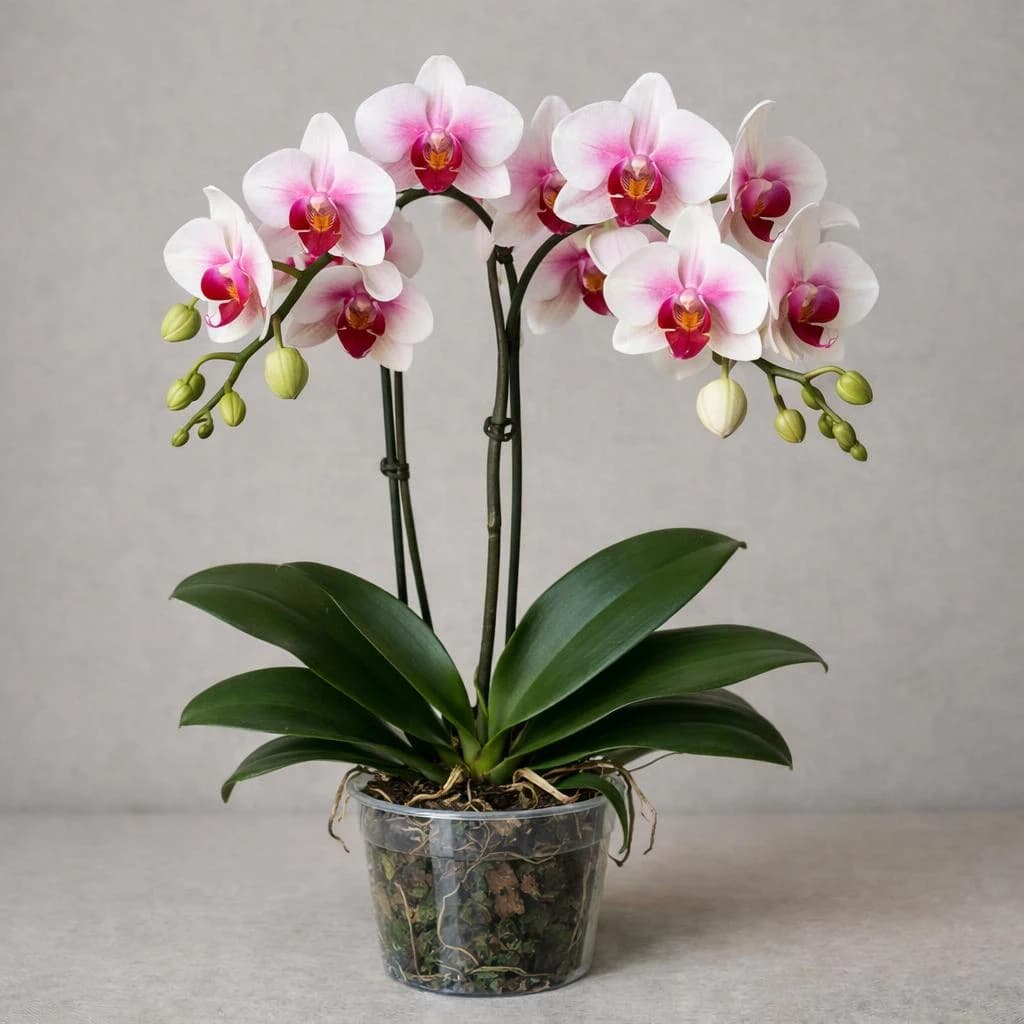
Mature Plant
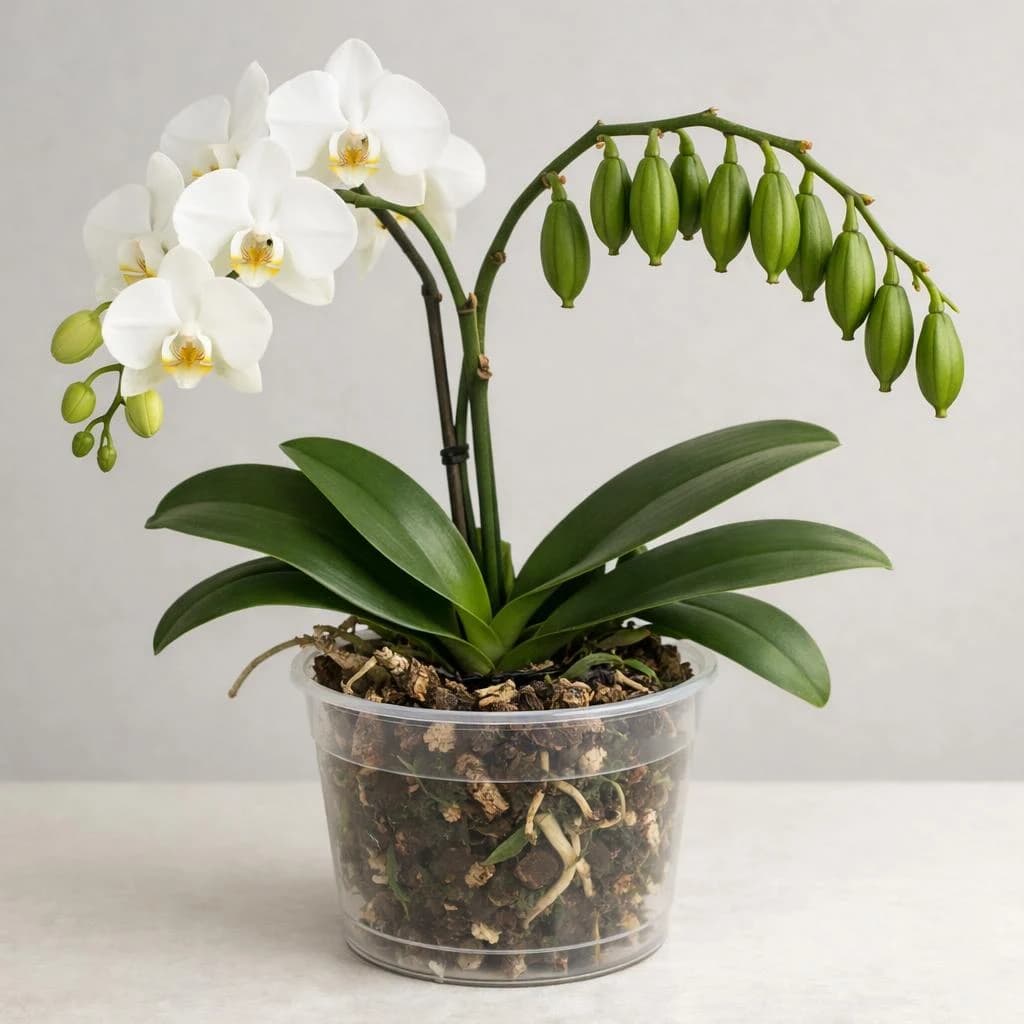
Seed Production
Step 1
Prepare Your Space
Vertical Growing
No.
Succession Planting
No.
Good Companions
Bad Companions
Step 2
Planting & Sprouting
Growing Tips
- 1Three things matter: bark not soil (it needs air around its roots), water weekly by soaking then draining fully (never leave it sitting in water.
- 2That's the #1 killer), and bright indirect light (an east window is ideal).
- 3Silvery-green roots want water; plump green roots are fine.
- 4After the flowers drop, cooler nights often spark a new spike, so don't bin it, it reblooms for years.
Seedling Phase
Step 3
Growth & Maturity
60 cm
Mature Height
30 cm
Mature Width
Pests to Watch For
Diseases to Watch For
Mature Plant
Step 4
Harvesting
Step 5
Saving Seeds
Seed Production
Still have a question?
Ask your coach about your orchid.
This page covers what we thought to write down. Your orchid will do something it never mentions, and that is the day a coach beats a guide. Ask Coach Lumen one question right now, free, no account.