Dianthus Growing Guide
Dianthus At a Glance
Difficulty
Easy
Category
Flower
Sun Exposure
Full Sun
Frost Tolerance
Frost Hardy
Cold Hardiness
Survives to -34°C
Plant Family
Caryophyllaceae
Growing Season
Cool Season
Plant Lifecycle
Perennial
How to Start It
★ Recommended for beginners
Pull or cut non-flowering shoots ('pipings') in summer and root them in gritty mix: quick, easy, and keeps named types true.
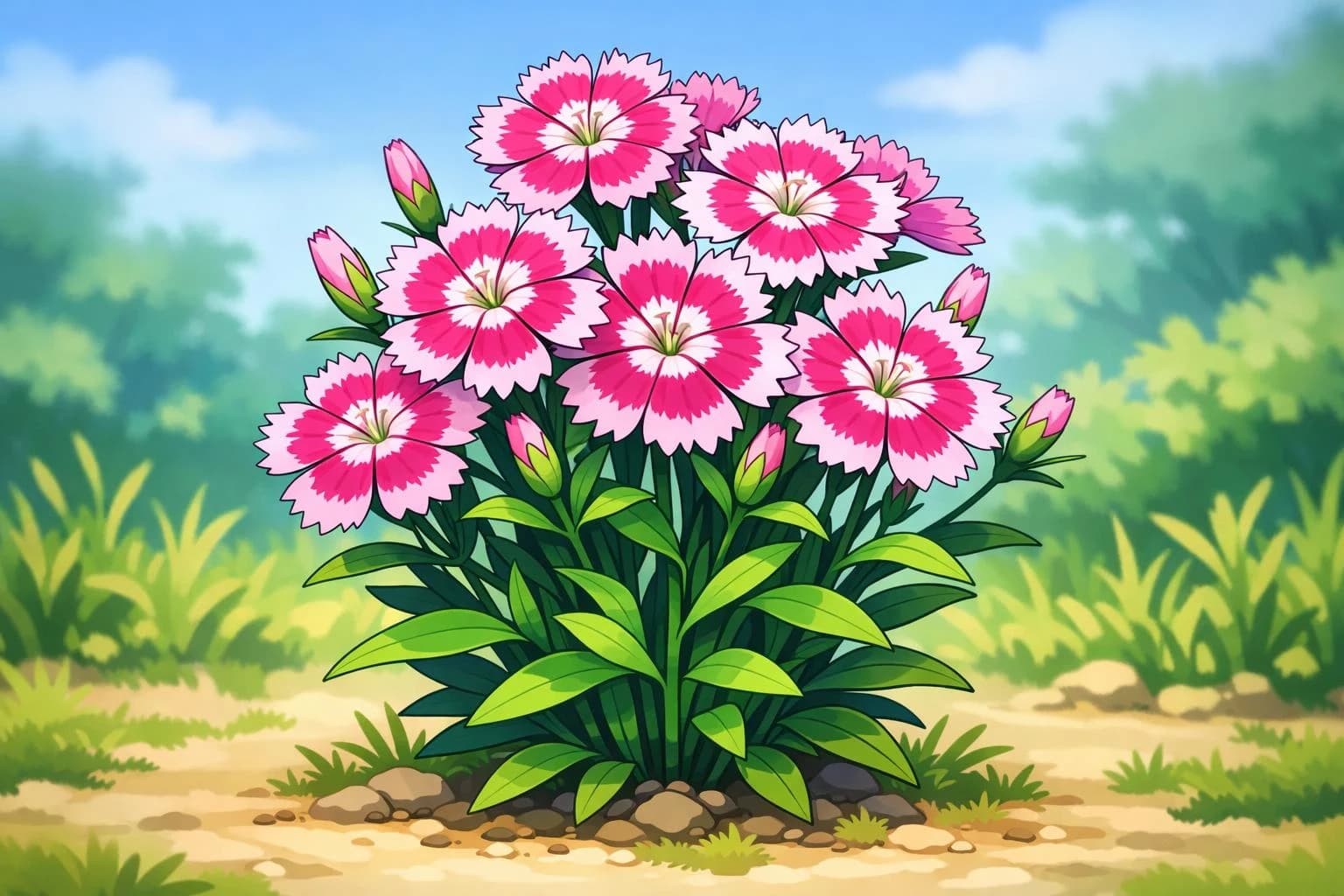
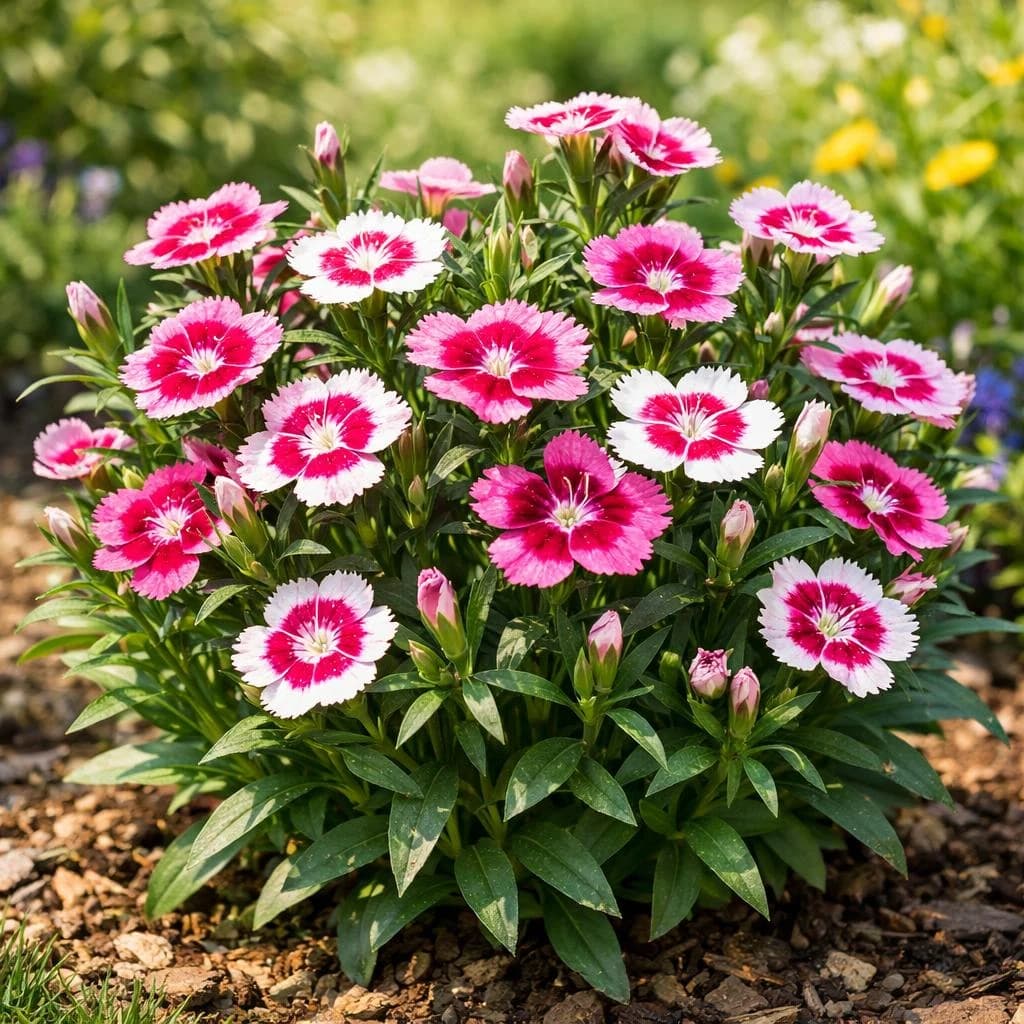
Pinks, carnations and sweet williams: compact, often deliciously clove-scented flowers with frilled petals (the 'pinked' edge gives them their name, not the colour) and neat blue-grey foliage. They love sun and sharp drainage, even thriving in poor, gritty or alkaline soil. Most are short-lived but easily renewed from cuttings. Deadhead regularly and many bloom for months. Pet-safe and a magnet for butterflies.
When To Start
Dianthus likes cool weather. Sow it in early spring, as soon as the ground can be worked.
We do not have exact sowing dates for this one yet.
When should you plant Dianthus?
Your planting dates depend on your local climate. Sign up and add your location to unlock personalized dates.
Your Dianthus Planting Window
Start planting
May 15, 2026
Last chance
Sep 10, 2026
Your Dianthus Calendar
Set your location to turn these into exact dates and reminders.
Plant dianthus (full sun, gritty, sharp drainage)
Around your last frost· every year
Deadhead dianthus often for months of bloom
45 days after your last frost· every year· optional
Take dianthus cuttings ('pipings') to renew plants
90 days after your last frost· every year· optional
The Journey Ahead
Dianthus's Lifecycle

Seedling
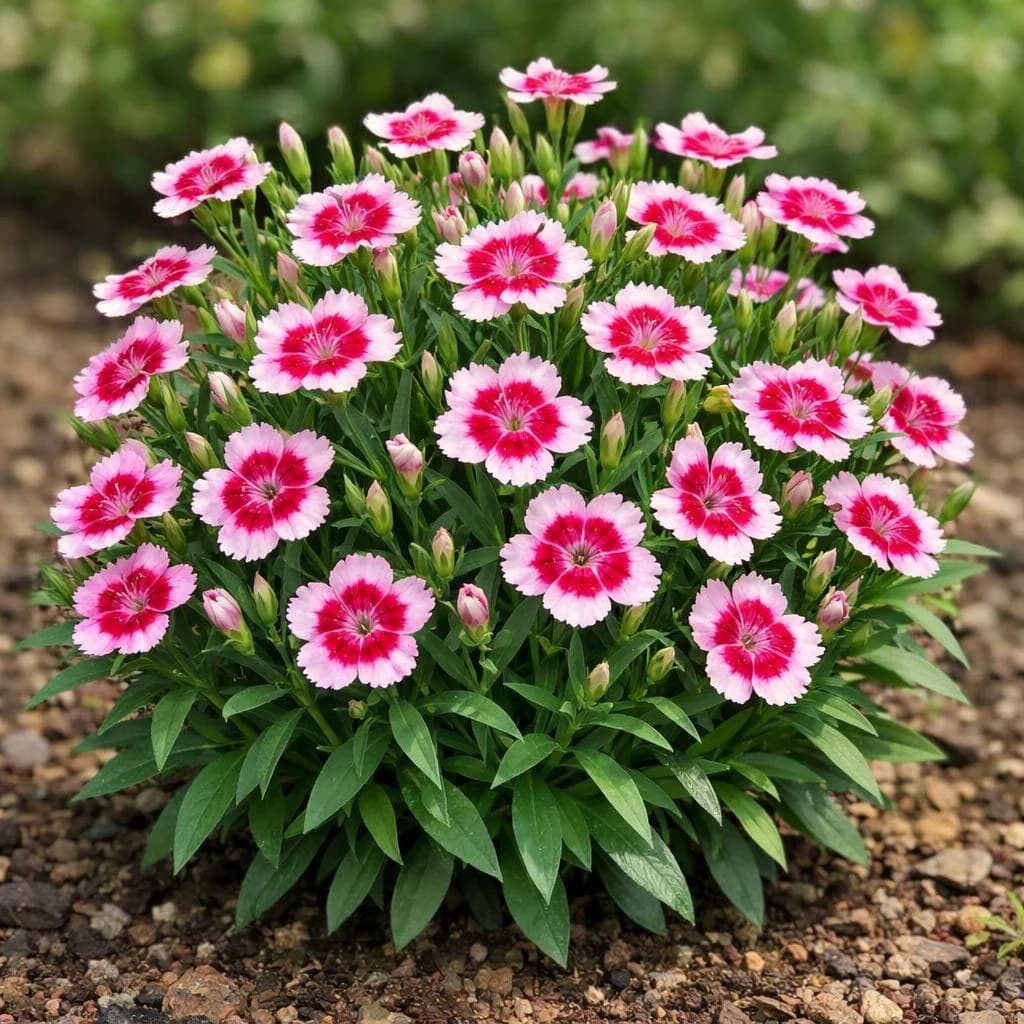
Mature Plant
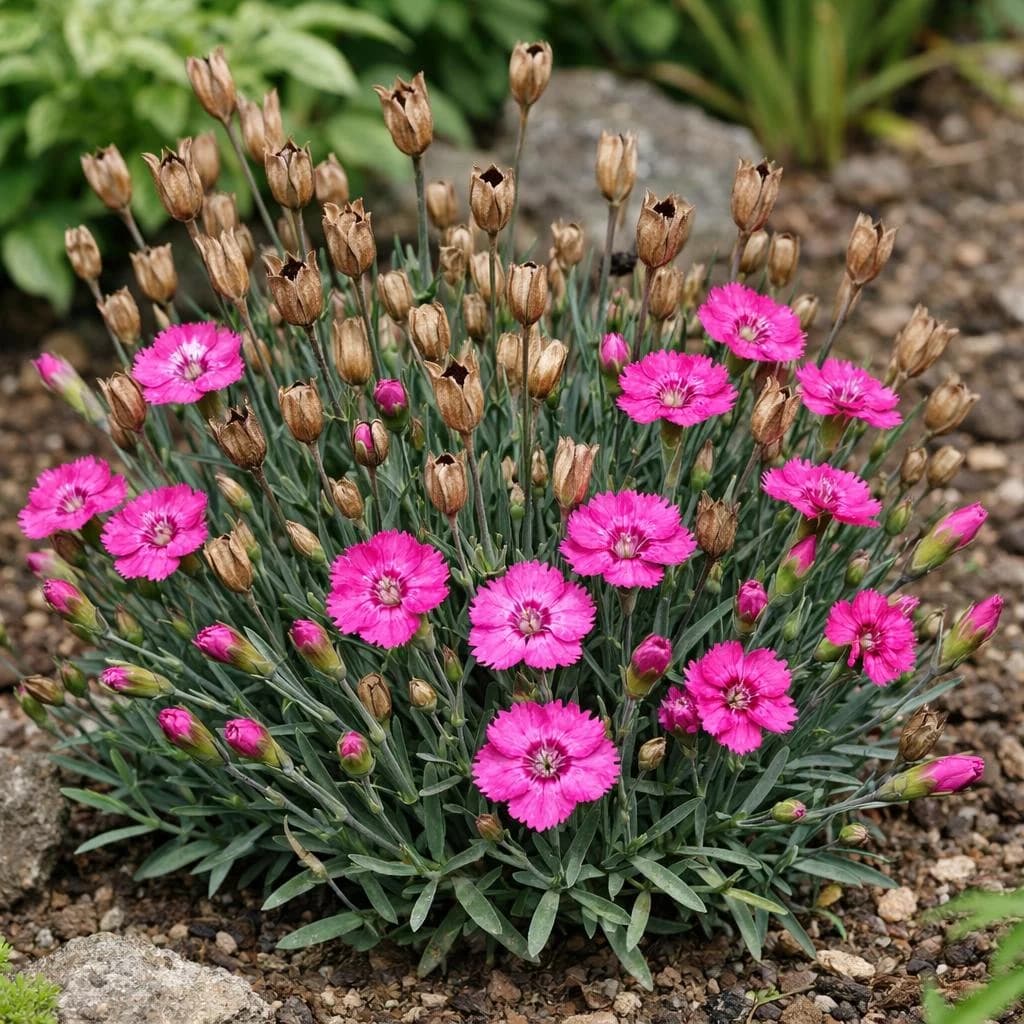
Seed Production
Step 2
Planting & Sprouting
Growing Tips
- 1Sun and drainage above all: dianthus rot in heavy, wet, rich soil but flourish in lean, gritty, sunny spots, including pots, walls and rockeries.
- 2Don't overfeed.
- 3Deadhead relentlessly for months of bloom, trim after flowering to stop them going woody, and renew from cuttings every couple of years.
- 4The grey foliage looks good even out of flower.
Seedling Phase
Step 3
Growth & Maturity
30 cm
Mature Height
30 cm
Mature Width
Pests to Watch For
Diseases to Watch For
Mature Plant
Step 4
Harvesting
When to Pick
Blooms late spring through summer; clove-scented and great for small posies
How to Harvest
- 1Deadhead spent flowers often.
- 2It's the single biggest thing for a long bloom season.
- 3After the main flush, lightly trim the plants over to keep them compact and tidy rather than woody and bare in the middle.
- 4Cut for small fragrant posies.
- 5Take cuttings each summer so you always have young, vigorous plants coming on to replace the short-lived parents.
Step 5
Saving Seeds
Seed Production
Still have a question?
Ask your coach about your dianthus.
This page covers what we thought to write down. Your dianthus will do something it never mentions, and that is the day a coach beats a guide. Ask Coach Lumen one question right now, free, no account.